1780 – The Official Blog of Transylvania University

1780 | The Official Blog of Transylvania University

Transylvania to scare up biggest-ever PumpkinMania on Oct. 24

 LEXINGTON, Ky.—Transylvania University’s PumpkinMania will be re-“vamped” this year because of the event’s increasing popularity. This Lexington Halloween tradition will continue on Tuesday, Oct. 24, when the university lights hundreds of jack-o’-lanterns on the steps of historic Old Morrison off West Third Street. The community is invited to attend this event, which will feature: •6-7 p.m. trick-or-treating, music, food trucks•7 p.m. jack-o’-lantern lighting Free, nearby parking will be available for the event. “We’re really excited about the changes we are making for this year,” said Michele Gaither Sparks, vice president for marketing and communications. “This will be our biggest PumpkinMania ever. We are closing off Third Street in front of the university, creating a larger trick-or-treat area, and bringing in food vendors and live music. Much of this year’s expansion is made possible by community partners such as our lead inaugural sponsor, White, Greer & Maggard Orthodontics.” Transylvania also will host a public pumpkin carving all day Sunday, Oct. 22, in Back Circle off Fourth Street. The Lexington community can still enjoy PumpkinMania after Tuesday’s lighting. The jack-o’-lanterns will be glowing each night through Halloween. “What better place to celebrate Halloween than Transylvania University?” Sparks said.  

College, Democracy, and Social Media Empires

The following originally appeared in Inside Higher Ed. Last weekend, I had the privilege of returning to my alma mater for the inauguration of Elizabeth H. Bradley, the 11th president of Vassar College. Returning to Vassar as the president of Transylvania University felt different from my arrival as a student in 1984. I was raised in the Bronx by Irish Catholic immigrants. Our Catholicism was quiet, expressed mostly by giving neighbors a hand, weekly Mass and private guilt. We had little time to follow the political issues of the day, and the internet did not yet exist. During my years at Vassar, however, there was no hiding from political issues. Well-informed, passionate students conversed about apartheid outside classes and staged demonstrations near the dining hall. Students engaged intensely with one another and professors. Courses forced us to seek out quiet spaces in the library where we struggled to master content that was opening us to new perspectives on the world.

Studio 300 Digital Art and Music Festival

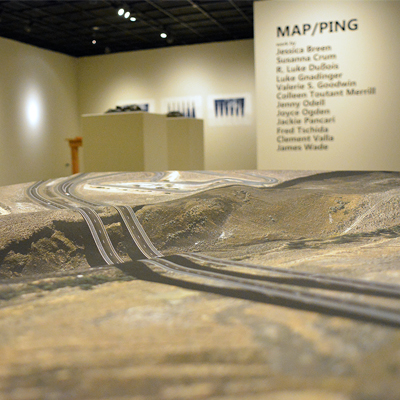
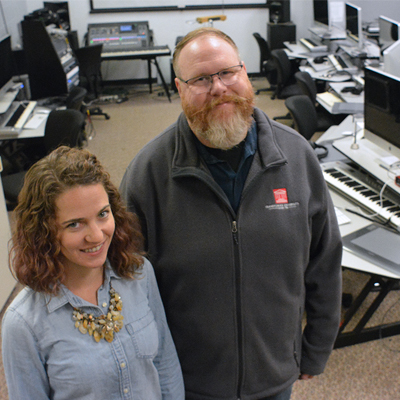
Composers, performers, artists and technologists from around the country will visit Lexington on Thursday, Oct. 5, and Friday, Oct. 6, for Transylvania’s Studio 300 Digital Art and Music Festival. Hosted by the university every other year, Studio 300 offers an exclusive front row seat at the leading edge of the international digital art and music scenes. Participants will present their work and interact with the public as well as Transylvania students, faculty and staff. This year’s event will double the number of artist talks and demonstrations. Read more.

TransyPods: Interview with Dr. Bethany Packard

Tristan Reynolds ’19 in conversation with Dr. Bethany Packard about her focus on the early modern period of English literature. Listen on Soundcloud Transcript SPEAKER: Welcome to another Campus Conversation– Discussions with Transylvania University Faculty, highlighting their interest, passions, and pursuits. Here is Tristan Reynolds. TRISTAN REYNOLDS: I’m here with Dr. Bethany Packard who is an English professor here at Transy, focusing on the early modern period of English language literature. What is that, exactly? BETHANY PACKARD: The early modern period and what people consider it to be can vary depending on your discipline. As I’ve, for example, if I were in French literature or history, I might extend the time period a little later. So in English literature, the early modern has come to be the standard term that’s used often for 16th and 17th century literature. It’s sort of become the replacement for the Renaissance. So before I entered graduate school, in the past, the more common term– and a term that’s still used quite a lot interchangeably with early modern– is Renaissance when you’re talking about the English Renaissance. Of course, the people who work on Italian and even some northern European folks might differ with that. But over time, that term has shifted. But if I were working in, like I said, something like French literature, I might extend that into the 18th century or I might extend it a little bit earlier. So it’s kind

Such Promise

Casey McBride ’14 Imagine your first day of school as a brand new teacher fresh out of teacher-training boot camp led by Teach for America. Now imagine that day in Walnut Park, not far from Ferguson, Mo., on the day after Michael Brown was killed. The cure for cancer? A new fuel source? An end to war? Sermons to open hearts? Art that redefines humanity? It’s all ready to be discovered by McBride’s class. If given the chance. Picture the blocks around the school: houses without roofs, walls crumbling, a few solitary figures roaming the streets, drug deals and gangs catching kids in the crossfire. Now walk into your fifth-grade classroom and meet 26 inquisitive, heart-breakingly bright, buzzing children. You don’t yet realize that so much of your energy in your first year will be given to keeping these young lives safe. You’ll be reaching deeply into their beings to draw out so much more than standardized tests demand or what this neighborhood—largely abandoned by the world—would seem to expect. Casey McBride ’14 says that people in St. Louis open their eyes wide when she tells them she teaches at Walnut Park Confluence Academy. But she wouldn’t be anywhere else. As a student at Transylvania McBride was known for getting involved. She was president of the Student Activities Board, active with her sorority and manager of the annual phone-a-thon that raises money for the university. When she graduated in 2013,