1780 – The Official Blog of Transylvania University

1780 | The Official Blog of Transylvania University

Transylvania Neuroscience Program Graduates First Class

LEXINGTON, Ky.—Transylvania University on May 23 graduated the first group of majors from its new neuroscience program. These students are poised to further their educations in graduate or professional school or join the workforce after taking an interdisciplinary approach to a range of scientific and philosophical issues—from artificial intelligence to how the brain functions and how it makes us who we are. Transylvania, which started the program in the fall of 2013, now has 35 neuroscience majors. Courses are as varied as Foundations of Computer Science, Behavioral Pharmacology and Music Cognition. The program allowed graduating senior Tiara Harris of Maysville to combine her three main areas of interest: biology, psychology and computer science. She said the major gave her a well-rounded perspective. “In my four years here, the liberal arts have taught me that there are many different viewpoints to solve a question,” she said. After graduation, Harris wants to focus on not only neuroscience but also education, possibly through Teach for America. She hopes to eventually land a job in the new field of neuroeducation. Senior Brooke Newman of Lexington said her neuroscience major provided an opportunity to learn the brain’s biology as well as understand, from a psychological standpoint, why we do what we do. “I’m also a psychology major, so the two played in very nicely to each other,” said Newman, who plans to apply to graduate programs in either neuroscience or clinical psychology. This year’s other

Transylvania among top 15 percent of nation’s four-year colleges

LEXINGTON, Ky.—The Princeton Review once again listed Transylvania University among the top 15 percent of the nation’s four-year colleges. “We selected these colleges primarily based on our high opinion of their academics,” according to the Princeton Review, which includes Transylvania in its book, “The Best 380 Colleges – 2016 Edition.” The Princeton Review—known for its college admissions, tutoring and test prep services—also conducted independent surveys of students at the country’s top schools. The report characterized Transylvania students as “passionate, involved, kind and intelligent.” There also is a collaborative culture at the school and “strong sense of community.” One of the students surveyed said professors are extremely accessible and “care about their students on a personal level.” The Princeton Review noted: “Individual attention is paramount at Transylvania University.” Additionally, a psychology and philosophy double major said students “care about each other and are ready to stand together to support a cause or a friend in need.” The survey also highlighted the many ways to get involved in groups and activities both on and off campus, and it mentioned Transylvania’s dynamic learning opportunities. Students can expect a rigorous, high-quality education at this liberal arts school, which “emphasizes interdisciplinary work” and fosters critical thinking. Plus, students commented on the ideal location of Lexington, which offers amenities such as “a rich culture of art” and dining and entertainment opportunities— furthermore, downtown is within walking distance of campus. In addition to including Transylvania in the Best

Transylvania hosts national liberal arts seminar

LEXINGTON, Ky.—Transylvania University recently continued its national conversation about liberal arts colleges through a seminar called Twenty-first Century Liberal Education: A Contested Concept. The Transylvania Seminar included 22 faculty participants from schools as far away as Middlebury College in Vermont and Wesleyan Nebraska University. Sessions ran July 23-25. “With its historical prominence, Transylvania is the ideal university to continue to host the collaboration of distinguished scholars to examine the sustainability of liberal education in this century,” said Laura Bryan, vice president for academic affairs and dean of the university. The public was invited to the seminar’s two public talks. Seamus Carey Transylvania University President Seamus Carey spoke on “Less is More: The Challenge of not Over-Administering the Liberal Arts.” Carey came to Transylvania in July of 2014 after four years as dean of the College of Arts and Sciences at Sacred Heart University. He also was the chairman of Manhattan College’s philosophy department. Jeff Freyman Jeff Freyman, professor emeritus at Transylvania, spoke on “Humanizing the Subject: Thoughts on a Curriculum for Liberal Education in the Twenty-First Century.” Freyman taught courses in comparative and international politics from 1980 until his retirement in 2014. The seminar also provided faculty participants an overview of liberal education throughout history and invited them to apply its principles to courses they teach at their own schools. Among the seminar’s other topics were “Reconnecting the Liberal Arts with the Natural Sciences and Mathematics” and “Entertaining Possibilities: Unconventional

Transylvania neuroscience program graduates first class

LEXINGTON, Ky.—Transylvania University on May 23 graduated the first group of majors from its new neuroscience program. These students are poised to further their educations in graduate or professional school or join the workforce after taking an interdisciplinary approach to a range of scientific and philosophical issues—from artificial intelligence to how the brain functions and how it makes us who we are. Transylvania, which started the program in the fall of 2013, now has 35 neuroscience majors. Courses are as varied as Foundations of Computer Science, Behavioral Pharmacology and Music Cognition. The program allowed graduating senior Tiara Harris of Maysville to combine her three main areas of interest: biology, psychology and computer science. She said the major gave her a well-rounded perspective. “In my four years here, the liberal arts have taught me that there are many different viewpoints to solve a question,” she said. After graduation, Harris wants to focus on not only neuroscience but also education, possibly through Teach for America. She hopes to eventually land a job in the new field of neuroeducation. Senior Brooke Newman of Lexington said her neuroscience major provided an opportunity to learn the brain’s biology as well as understand, from a psychological standpoint, why we do what we do. “I’m also a psychology major, so the two played in very nicely to each other,” said Newman, who plans to apply to graduate programs in either neuroscience or clinical psychology. This year’s other

Four Transylvanians earn Fulbright grants to teach in Asia

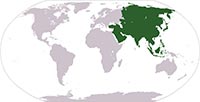
LEXINGTON, Ky.—Three graduating Transylvania University seniors and one alumna will travel to Asia in the fall to teach English through grants from the highly competitive Fulbright English Teaching Assistant program. Thomas Amburn from Fisherville, Ky., will travel to Thailand; Courtney Marshall from Louisville will go to Malaysia; Rachel Smith from Mayfield, Ky., will head to South Korea; and 2013 graduate Leslie Bartley from Bardstown, Ky., will be in India. All four of the recipients spent time abroad during their Transylvania careers studying and tutoring. They were chosen in part because of their extensive community service and campus leadership. They will teach English for the 2015-16 academic year. The Fulbright program, sponsored by the Bureau of Educational and Cultural Affairs of the U.S. Department of State, was established in 1946 by legislation introduced by Sen. J. William Fulbright of Arkansas. Its purpose is to increase mutual understanding between the people of the U.S. and other countries. More than 1,900 U.S. citizens will travel abroad for the 2015-16 academic year through the Fulbright U.S. Student Program. Recipients of Fulbright grants are selected on the basis of academic and professional achievement, as well as demonstrated leadership potential. Fulbright recipients Amburn participated the TUTORS (Transylvania University Tutoring Organization for Refugee Students) program and volunteered as an English conversation tutor in China, Hong Kong and Cambodia during the summers. He plans to attend medical school and eventually train aspiring physicians in rural Southeast Asia. Ambrun