1780 – The Official Blog of Transylvania University

1780 | The Official Blog of Transylvania University

Lexington author wins Transylvania’s Judy Gaines Young Book Award

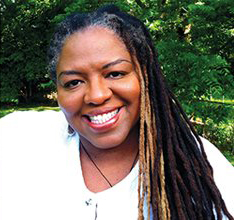
LEXINGTON, Ky.—Local author Crystal Wilkinson has won Transylvania University’s 2017 Judy Gaines Young Book Award for her novel, “The Birds of Opulence.” Wilkinson is a founding member of the Affrilachian Poets collective, the Appalachian Writer in Residence at Berea College and co-owner of Wild Fig Books & Coffee in Lexington. Wilkinson will receive the award on Tuesday, March 21, at 5 p.m. in Transylvania’s Carrick Theater. The event, which will be free and open to the public, will include a reading and book signing. This is the third year for the Judy Gaines Young Book Award, which honors recent works by writers in the Appalachian region. The University of Kentucky Press—the publisher of this year’s winner—describes the novel as “a lyrical exploration of love and loss that centers on several generations of women in a bucolic southern black township as they live with and sometimes surrender to madness.” Wilkinson is an “extraordinary storyteller,” said Transylvania English professor Kremena Todorova. “Her characters in ‘The Birds of Opulence’ are ordinary people dealing with everyday events like birth, postpartum depression, illness and the fast-spreading gossip of small-town folks. Yet, Wilkinson asks us to care about her people. Using language that is irresistibly beautiful, Wilkinson beckons us to enter her characters’ lives, to begin to do what the novel’s opening word asks us to do: ‘Imagine.’” “The Birds of Opulence” has won several other honors, including the Ernest J. Gaines Award for Literary Excellence. Transylvania’s award is funded by

Transylvania launches Summer Academic Program for high schoolers

LEXINGTON, Ky.—Beginning this summer, Transylvania University will offer area high school students the opportunity to get a head start on their college careers in its new Summer Academic Program. Rising high school juniors and seniors can take courses on campus, taught by Transy faculty, that can earn them college credit and potentially count toward their high school curriculum requirements. They will learn alongside current and entering Transylvania students and will get all the benefits of being a Pioneer, including personal attention from professors and access to the library and its resources. Students will pay approximately half the price of standard tuition rates, and those fees can be earned back in the form of a scholarship to Transylvania. “We look forward to working with some of the brightest young minds in the area, preparing them for success in their college careers while showing them the tremendous value of a Transylvania education,” said Laura Bryan, vice president for academic affairs and dean of the university. The Summer Academic Program has 10 classes available in its first year, with subjects including politics, public speaking, economics and environmental science. It is open to rising high school juniors and seniors, as well as current high school seniors who have been admitted to Transy, and students from other institutions. For class information and registration, which is open until May 15, go here.

The Places We Live: Social Practice Artworks

Lexington, Ky.— Transylvania University’s Morlan Gallery presents “The Places We Live,” an exhibition of artists working in social engagement from Feb. 21 through March 29. Six social intervention artists from across the U.S. will activate local and regional spaces while exhibiting tangible art objects from those programmed interventions. The artists include Meredith Knapp Brickell, Wes Janz and Sean Starowitz of Indianapolis; Maria Lind Blevins of Morehead, Ky.; Mark Menjivar of San Antonio, Texas; and Michael Strand of Fargo, N.D. Social practice artists embrace a variety of methods to engage with community, both directly and indirectly. Brickell is one the artists who decided to work directly with the Lexington community. Over the last six months, she has travelled frequently to meet with a group of girls from the Northside neighborhood. This group of 7-11 year-olds—called Busy Bees—has ventured into neighborhoods with cameras and notepads to document communities. The project, titled “Sidewalk Stories,” also has been facilitated by neighborhood resident Felice Salmon. It will culminate in a Busy Bee-created fanzine, which will be on display in the Morlan Gallery as part of a larger in-gallery installation documenting the project. A variety of other social interventions will be included in “The Places We Live”—including Menjivar’s “My Sadness Goes On and On…,” a listening station of collected sad songs submitted to him from contributors around the world. Also, Janz’s installation, “Crazy for Cages,” examines the U.S. prison industrial complex. Morlan Gallery, located in Transylvania’s

TransyPods: Interview with Dr. Kerri Hauman

Brandon Trapp 19 Interviews Dr. Kerri Hauman Listen on Soundcloud Transcript SPEAKER 1: Welcome to another campus conversation. Discussions with Transylvania University faculty, highlighting their interests, passions, and pursuits. Here is Brandon Trapp. BRANDON TRAPP: So I’m here with Dr. Kerri Hauman. And we’re going to talk today about the digital liberal arts. So first I want to ask, what is digital liberal arts? KERRI HAUMAN: It’s a loaded question. Of course, academics never like to give straightforward definitions of anything. When I think about the digital liberal arts, I sort of think about it as almost a silly thing, like a silly title, because the digital is already in the liberal arts. And we’re not, like when we’re just talking about liberal arts education without any sort of adjective or other word tacked on the front there, I think the digital is already there. But I think we name it that, because the technology is often sort of invisible, right? There are different course management systems, like Moodle and other things, that are being used. And so the digital is there. But they sort of blend into the background of the larger activity of higher education. And they’re not necessarily the focal point of it. And so I think that’s part of the reason why we give it that full label of digital liberal arts to sort of call to attention the digital that’s there already. I think also,