1780 – The Official Blog of Transylvania University

1780 | The Official Blog of Transylvania University

McZee named associate vice president for diversity and inclusion

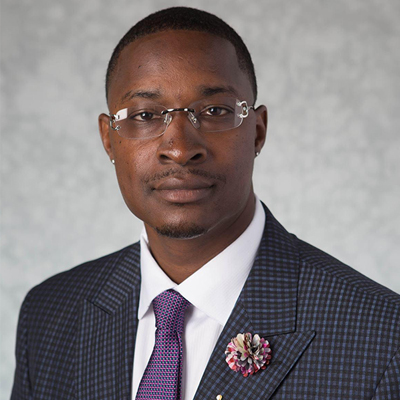
LEXINGTON, Ky.—Taran McZee has been named Transylvania University’s new associate vice president for diversity and inclusion.  McZee, who will begin this spring, has more than 12 years of higher education experience in diversity and inclusion services, multicultural affairs and international programs—most recently at Grand Valley State University. “I’m very excited about this great opportunity at Transylvania University, and I’m ready to push Transy to the next phase of diversity and inclusion,” he said. McZee will deepen the university’s commitment to the values of its Project One initiative, which cultivates a campus community characterized by compassion, respect, ethical concern and social responsibility. Transylvania President Seamus Carey said McZee can help the university foster these values through innovative initiatives and building meaningful relationships. “He is passionate about students from all backgrounds, and about working with offices across campus to achieve our diversity and inclusion goals.” 

Full Circle

Shericka Smith ’05 As a young teen, Shericka Smith ’05 watched her mother at work as the director of the Salvation Army’s homeless shelter. She absorbed the many gestures of kindness and the trauma of families being separated. “Since then,” she says, “I’ve had this passion for helping families and helping kids, and helping parents stay on track so they can do what’s best for their kids.” Smith excelled as a student at Tates Creek High School and followed her sister, Shawnetta, to Transylvania, where she was able to thrive, she says, and “prove that no matter where you come from you can succeed.” In 2014, she returned to her alma mater, Tates Creek High, where she was named Kentucky’s 2016 School Social Worker of the Year. “I’ve been blessed by having opportunities,” she says. “I just felt it made sense to come back and help the same folks in the same neighborhood I grew up in and left to make a better life.” Every day is different for Smith, because, as she explains, students who experience trauma manifest it in ways that can’t be anticipated. “For the kids who act out, once we dig deeper and find out it’s because of a traumatic event, then we can work with them.” And listen. I just felt it made sense to come back and help the same folks in the same neighborhood I grew up in and left to make a

Compassion in Palliative Care

Kathryn Perry ’10 The Rev. Kathryn Perry ’10 steers head-on into what most of us shove aside until left without any choice: death—and prioritizing what is important during the transition from life to deaeth. As a palliative care chaplain at the University of Kentucky’s Chandler Hospital, her days straddle this life and the next for families of every background and belief. Perry’s work requires putting the self aside to enter a sacred and exceedingly difficult place, listening carefully to the needs of the most vulnerable and being supportive of her peers on the palliative care team. Together they tend “the sickest of the sick” from around the state, meeting them at any point in an illness. “Pain is physical, emotional and spiritual,” she explains, which is why the palliative care team is interdisciplinary. Much of her work is about helping people with anxiety and providing emotional support. “The listening component is one of the most beautiful things about what I get to do every day,” she says. “I invite people to tell me about their lives or what’s important to them, what they value.” More often than not, it isn’t a party affiliation or a particular argument that rises to the top—“it is spending time with the people they love, it is going fishing or watching television and eating ice cream—those very simple, seemingly ordinary pieces of life that really make us who we are.” These end-of-life lessons are ripe

TransyPods: Learn You a Thing with Dr. Steve Hess

Learn You a Thing Episode 1: Dr. Steve Hess Explains Chinese Politics Listen on Soundcloud Transcript TRISTAN REYNOLDS: Hi. Welcome to the Learn You a Thing podcast. I’m Rambler editor in chief, Tristan Reynolds. In each episode, I’m going to talk to an expert about their expertise, and by the end of it, we’ll all be smarter. This week, Dr. Steven Hess explains politics in China. [MUSIC PLAYING] So I’m here with Dr. Steve Hess who is an expert on Chinese politics. And as a mark of respect for that expertise, I’m going to ask you to explain Chinese politics in 30 seconds from a 3,000 foot level. STEVE HESS: OK. Well, when you’re looking at Chinese politics, you look at the establishment of the People’s Republic of China in 1949. You know, the fact that China functioned as a Communist single party state from then until the present. But that doesn’t really tell you the whole story. We’ve seen China really evolve from Maoism from 1949 all the way up to 1976, which you had a totalitarian state, mass campaigns. People lived and breathed politics. You know, the party was really intrusive and controlled every part of your life up until the late 1970s in which China has maintained that same single party political structure, but has implemented market reforms. And so we still have this same basic political structure in which you have a single party state led

Princeton Review puts Transy in top 7 percent of colleges for Bang for Your Buck

Transylvania University has been named in The Princeton Review’s 2018 edition of “Colleges That Pay You Back: The 200 Schools That Give You the Best Bang for Your Tuition Buck.”  Transylvania has long aimed to keep its tuition and fees competitive with the top colleges in the nation—currently it costs almost $10,000 less than the average top-100 private liberal arts college. Students graduate with 15 percent less debt than the average private school borrower. This annual guidebook, now in its fourth year, is the education services company’s resource for college-bound students and their parents shopping for affordable, academically outstanding colleges that graduate their students to successful, rewarding careers. The full lists, profiles and information on the project methodology are accessible at www.princetonreview.com/colleges-pay-you-back. The Princeton Review chose the 200 schools for this edition based on a comprehensive analysis of data from its surveys of administrators at more than 650 colleges in 2016-17. Survey topics broadly covered academics, cost, financial aid, career services, graduation rates, student debt and alumni support. The company also factored in data from PayScale.com surveys of alumni of the schools about their starting and mid-career salaries and job satisfaction. In all, more than 40+ data points were crunched to select the 200 schools for the book and tally its seven ranking lists. Only 7 percent of the nation’s four-year colleges made it into this book, noted Robert Franek, its lead author and The Princeton Review’s editor-in-chief. These schools were bona fide standouts