
At some point during a college search, the schools can start to run together.
You’ve seen the residence hall photos. You’ve compared majors, admission requirements and scholarships. Your inbox is full of colleges introducing themselves, reminding you about deadlines and inviting you to visit. You may have a spreadsheet. Your parents may have a spreadsheet. There may, unfortunately, be more than one spreadsheet.
And somewhere in all of that information, you’re supposed to figure out where you actually want to spend the next four years.
If you’re searching for colleges right now, it helps to remember that you’re not looking for the school that wins every category on a comparison chart. You’re trying to find a place where the academics, people, opportunities, cost and everyday experience add up to something that feels right for you.
That takes a little more digging.
Look at what your life would actually be like
Majors matter, of course. So do academic reputation, financial aid and what graduates go on to do. But you’ll spend four years at the college you choose, and most of those four years won’t be spent having the big experiences colleges put on the front of their brochures.
They’ll be regular days.
You’ll walk to an 8:30 class when you would very much prefer it were an 11:30 class. You’ll grab coffee, find a favorite place to study, meet friends for dinner and look for something to do on a Thursday night. You’ll have classes that come easily and others that send you looking for help.
When you’re researching colleges, try to picture those days too.
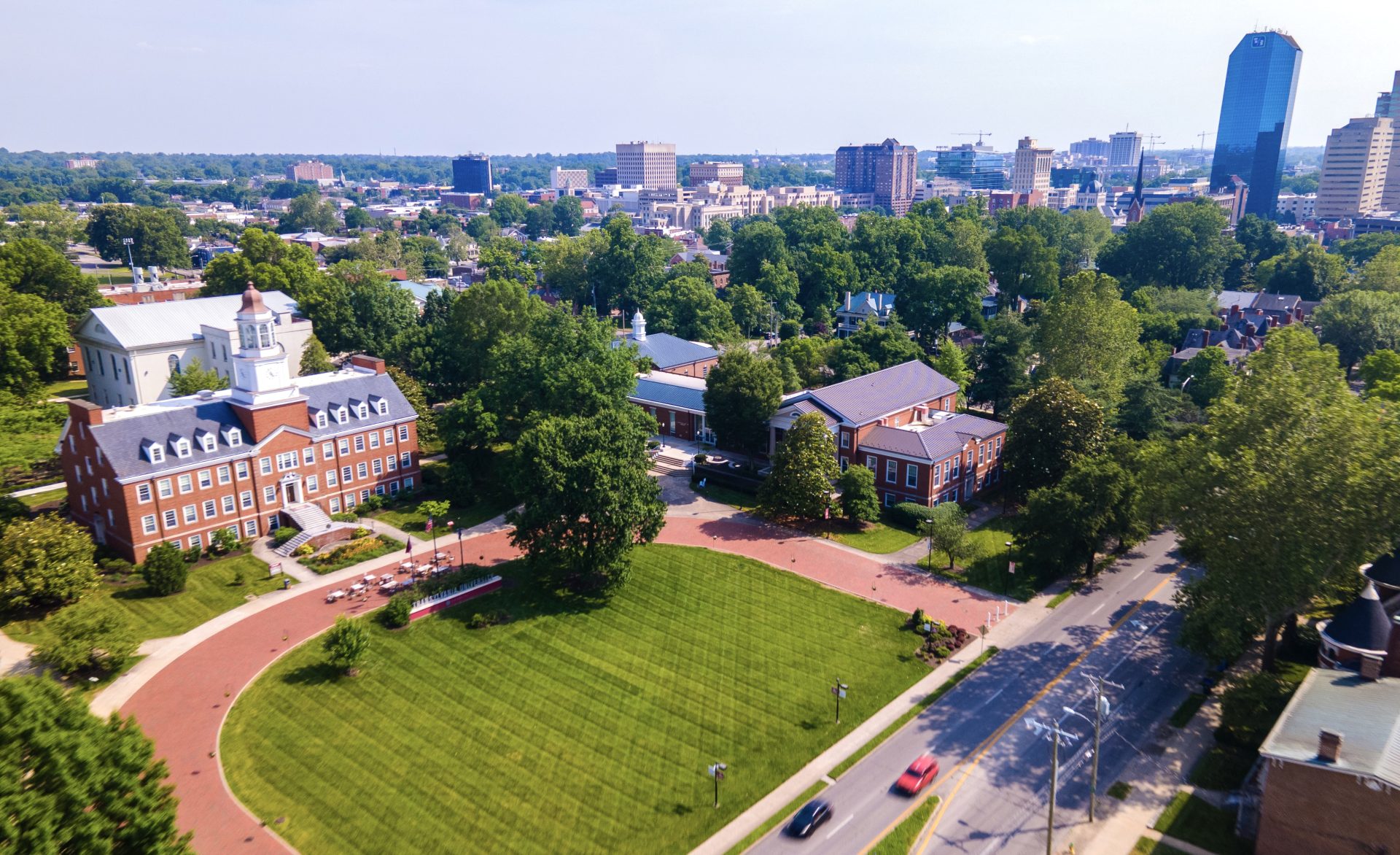
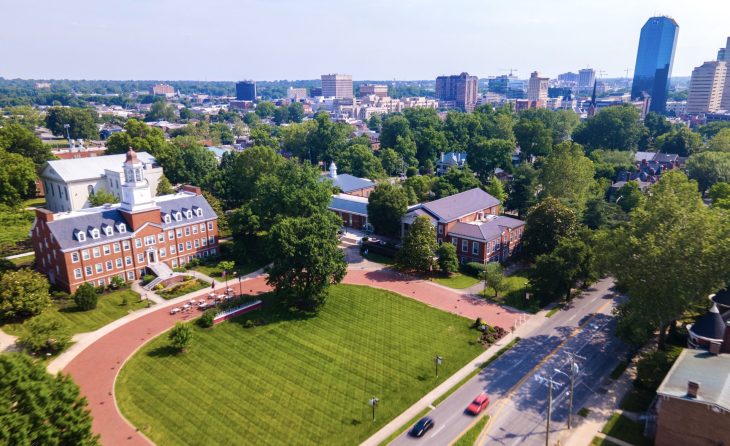
Transylvania University offers a somewhat unusual combination: a small, private liberal arts college on a walkable campus in downtown Lexington, Kentucky. Transy students have the close community of a college with an 11:1 student-to-faculty ratio and an average class size of 15, but they’re also living in a city of more than 300,000 people.
That changes the experience in practical ways.
A small class means your professor is likely to know who you are and what you’re working on. With 45+ majors and more minors and preprofessional options to explore, you can arrive with a plan or take some time to find one. You might leave class and head to Gratz Perk, meet friends in Alumni Plaza or walk downtown. An internship, volunteer experience or professional connection can be in Lexington rather than something you’re waiting until summer or senior year to pursue.
Your campus is home, but it isn’t the edge of your world.
Give yourself permission not to have your future figured out
Students are asked what they want to “do” remarkably early in life.
By senior year, it can feel as though you’re supposed to have a polished answer.
Some students do. If you’ve known for years that you want to become a physician, start a business, make art or study neuroscience, that’s exciting.
It’s equally normal not to know.
One of the advantages of a liberal arts education is that exploration isn’t treated as wasted time. At Transy, you can study across disciplines while going deeply into the areas that interest you most. A biology student can discover an interest in philosophy. A business student can take studio art. Someone who arrives undecided can encounter a field they didn’t know existed in high school.
And because classes are small, that discovery happens through conversation as much as course selection.
Professors teach, but they also become advisers and mentors. They’re the people who may suggest a research opportunity, encourage you to apply for something you weren’t sure you were ready for or help connect an academic interest to a career you hadn’t considered.
That’s worth looking for during a college search. You aren’t only choosing what you’ll study. You’re choosing the people and environment that will help you decide what to do with it.
Look past the degree to what you’ll actually get to do
This is one of the most useful questions to ask any college you’re considering: What do students here do before they graduate?
Internships and research experience matter. So do study abroad, mentoring, leadership opportunities and the chance to take something you’ve learned in class and use it somewhere else.
At Transylvania, that idea is formalized through the Real-World Guarantee. Every student is guaranteed an opportunity for a high-impact learning experience through an internship, study abroad or alumni mentoring.
Lexington adds another layer to that. Transy students are surrounded by businesses, healthcare organizations, nonprofits, schools, arts organizations, entrepreneurs and community partners. For some students, the connection between college and career can start just a few blocks from campus.
That experience matters when graduation arrives. Ninety-five percent of Transylvania graduates are employed or attending graduate school within six months.
The goal isn’t to arrive at college already knowing exactly where you’ll end up. It’s to leave with experience, people in your corner and a much better sense of what you can do next.
Don’t decide what you can afford by looking at tuition alone
This is one place where college websites can be especially confusing.
If you’re comparing public and private colleges, the published tuition price doesn’t necessarily tell you what each school would actually cost your family. Scholarships and financial aid can change the numbers significantly.
At Transylvania, 99% of students receive financial aid, with an average aid package of more than $40,000. Automatic academic merit scholarships currently range from $25,000 to $34,000 per year, and additional competitive scholarships are available.
For students entering in fall 2027, there’s another good reason to visit Transy this fall: Students who complete an official campus visit by Dec. 1, 2026, and are admitted for fall 2027 receive a renewable $1,000 Campus Visit Scholarship — $4,000 over four years.
So before you decide a college is too expensive, use its Net Price Calculator. Apply. See what scholarships and financial aid you’re actually offered. Then compare.
You may find that your college list looks different once you’re comparing real numbers.
Eventually, get off the internet
Research can get you a long way. You can explore academic programs, look at campus maps, read student stories, watch videos and compare financial aid from your couch.
Eventually, though, you need to see the place.
A Transy campus visit includes a 60-minute walking tour, with options to meet with an admissions counselor, faculty or staff. But don’t treat the visit like an assignment where your job is to collect enough facts.
Look around.
Notice whether students seem to know one another. Pay attention to the distance between the residence halls and classrooms. Ask your tour guide where they actually spend time. Ask what surprised them after they enrolled. If there’s a major you’re considering, find out what it’s like to study it here.
And because Transy’s campus is downtown, leave yourself some time for Lexington. Walk a few blocks. Get lunch. See what’s nearby.
Try, for an afternoon, to stop imagining yourself as a prospective student on a college tour and imagine that it’s simply where you live.
You may know immediately that a college isn’t for you. That’s useful information too.
But you may also find yourself looking at a classroom, a residence hall, a patch of campus or a street just beyond it and thinking: I could do this here.
That’s a pretty good reason to keep looking at Transylvania University.
Come see Transylvania University for yourself. Schedule a campus visit in downtown Lexington, meet the people who make Transy what it is and spend some time imagining your own days here.
Ready to start something big? Apply to Transylvania University.