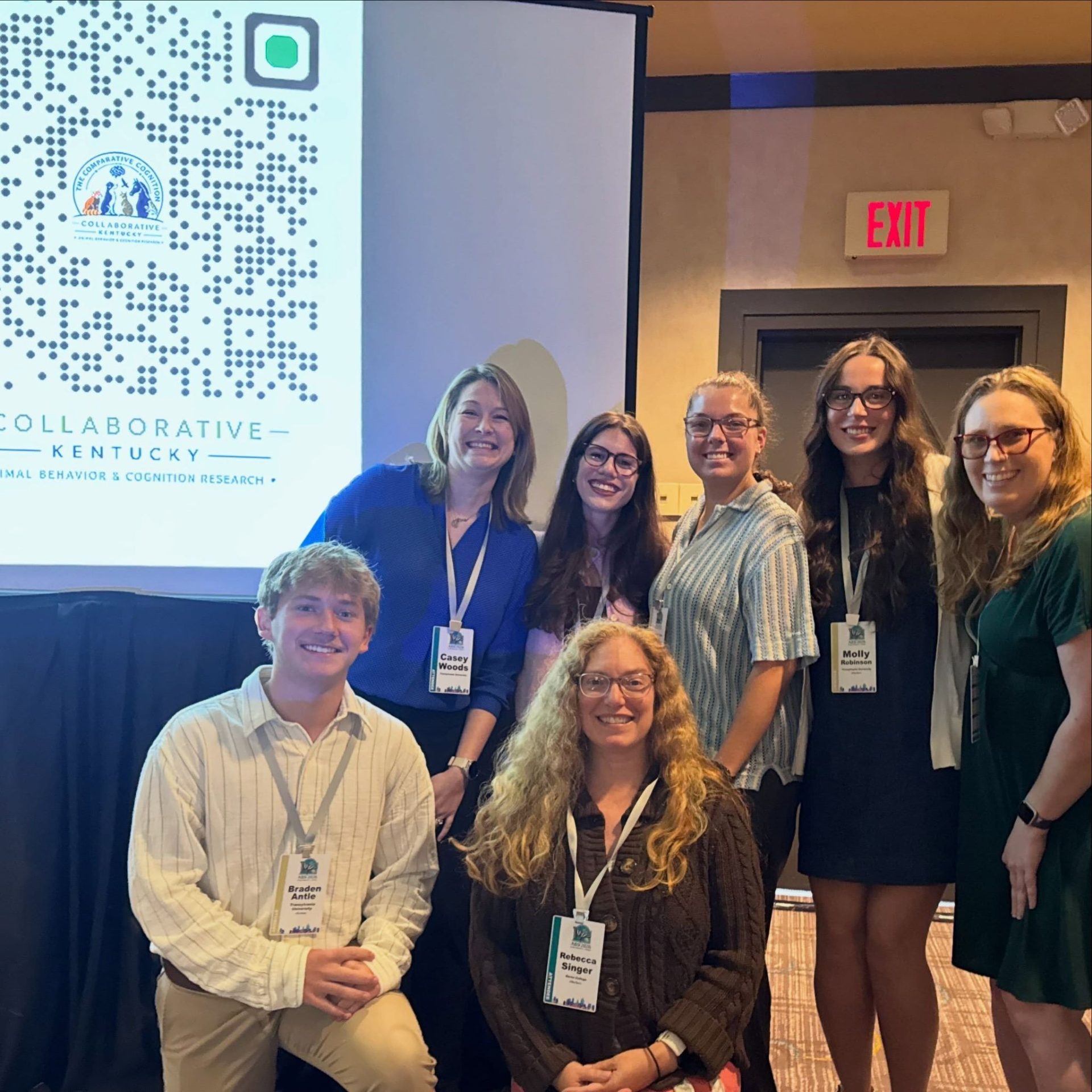
One of our favorite things about doing animal research in Central Kentucky is that there are a surprising number of us here.
The Comparative Cognition Collaborative brings together faculty, students, and community partners from Transy, Berea, Centre, UK, EKU, and the Lexington community who think about animals from very different directions—psychology, biology, philosophy, sociology, agriculture, animal studies, and applied animal welfare.
Once a month, we get together, informally, over dinner, and talk animals.
People bring research ideas, weird results, half-developed projects, things they’ve read, problems they’ve encountered working with animals, and questions they can’t quite answer. We argue, suggest alternative explanations, connect people with papers or methods they didn’t know about, and regularly leave with different ideas than those we walked in with.
At one recent meeting, a colleague from the Lexington Humane Society brought in a popular article about ADHD-like traits in dogs. An animal-studies colleague suggested research that might help us think about it differently. Two of our students connected that discussion to an ongoing Dog Lab project on impulsivity—and we realized a measure from the ADHD study might be useful for our impulsivity study. So we modified our study.
That’s the power of the Collaborative. Different people know different things, and putting us in a room together changes the questions we ask and the work we do.
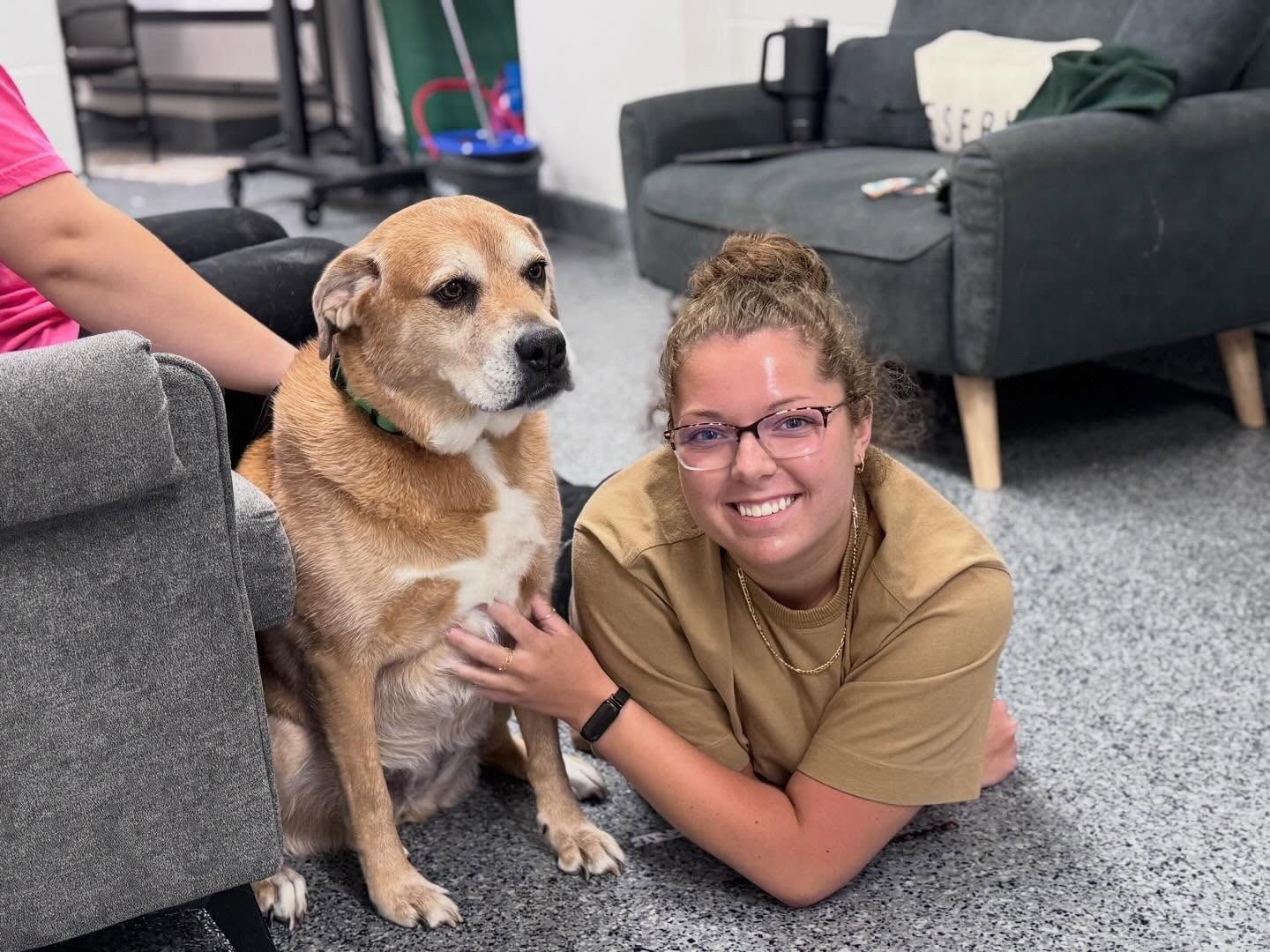
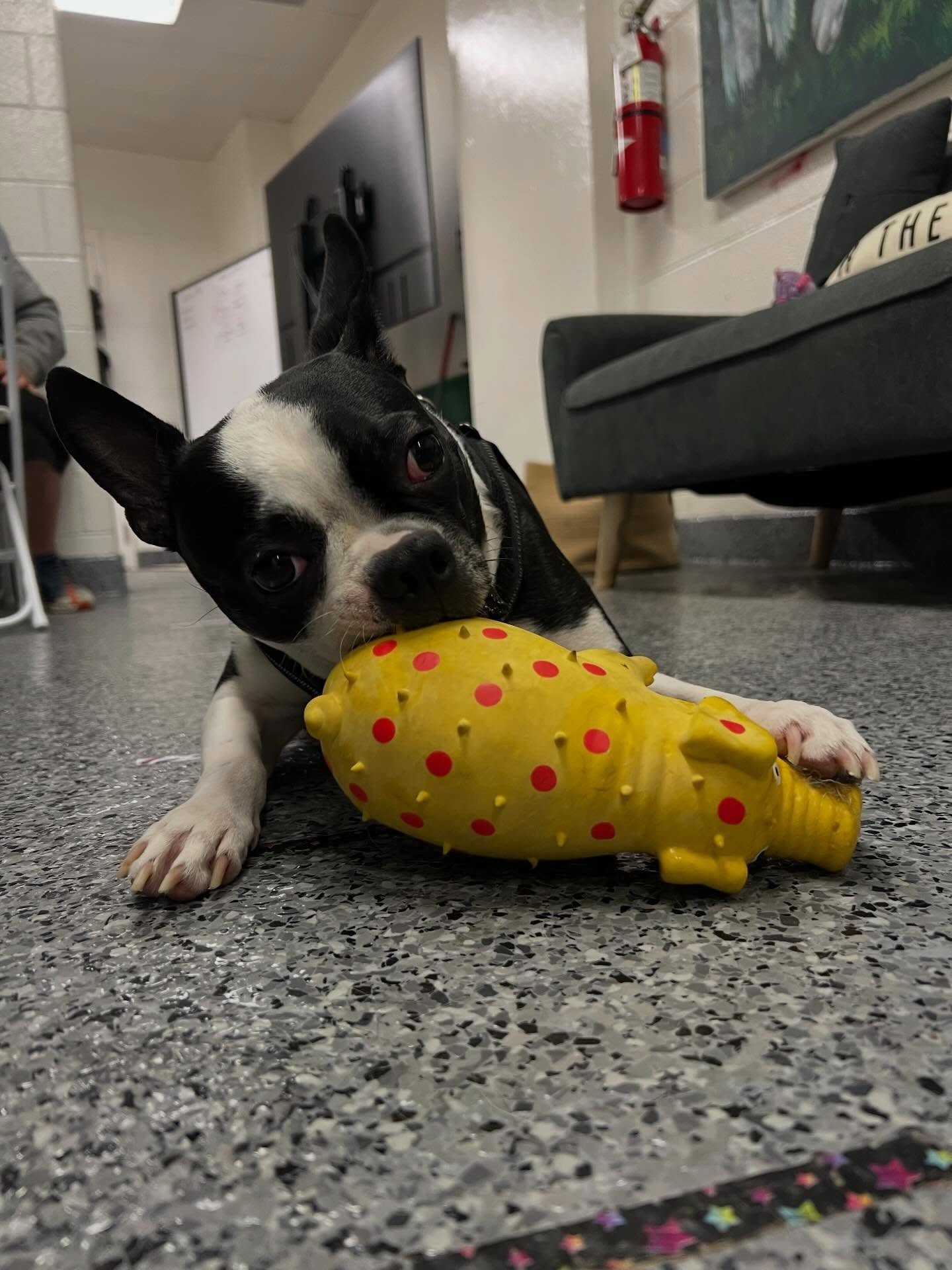
Our network extends well beyond Kentucky
We also collaborate with researchers farther afield, but that work looks a little different.
Small colleges can have terrific researchers and enthusiastic students without having everything needed to launch a particular research program. Someone may have a great question but not hundreds of local dog participants. A colleague who studies zoo animals may have students eager to study dogs but little experience running canine-cognition studies. Another researcher may have a research question but no access to zoo animals.
That’s where we can share resources with each other.
We’re currently working with colleagues at places including Occidental College, Pace University, Eckerd College, and Sacred Heart University—collecting data together, sharing protocols and expertise, mentoring students and junior colleagues, and building projects across institutions.
We sometimes call all of this “big research at small schools.” None of us has to have every piece ourselves. We can build something much more interesting by building the pieces together.