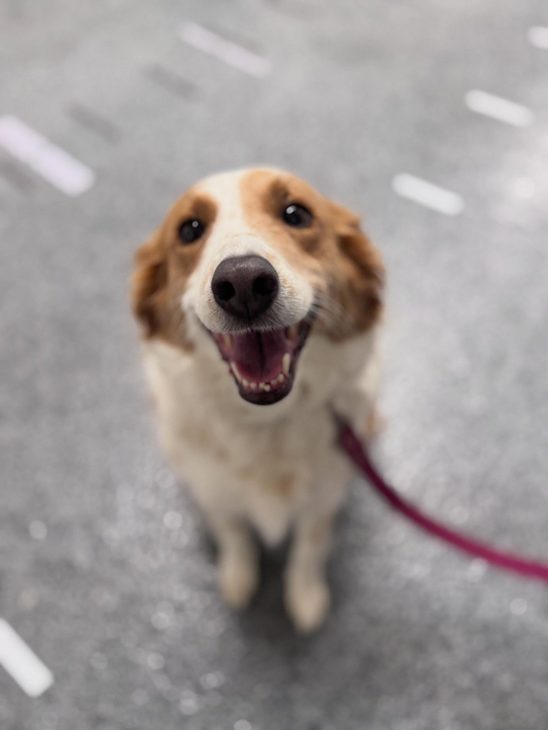
What goes on inside a dog’s mind? Why do dogs behave the way they do? And can understanding those things help dogs and people live better together?
Those questions take us from basic science to problems dog owners encounter every day. Much of our current research focuses on impulse control: what it is, how we should measure it, whether training can change it, and whether something a dog learns in one situation carries over to another. These aren’t just academic questions. Dog owners are routinely told that practicing behaviors such as “stay,” “wait,” or “leave it” will build a dog’s general self-control. We can actually test whether those claims are true—and use what we learn to better understand both how dogs think and how we should train them.
We’re also branching into other questions about canine cognition. Through a collaboration with Dr. Molly Byrne at Pace University, for example, we’re studying dogs using a version of the Blicket Task, a paradigm originating in developmental psychology that asks questions about how learners reason about cause and effect.
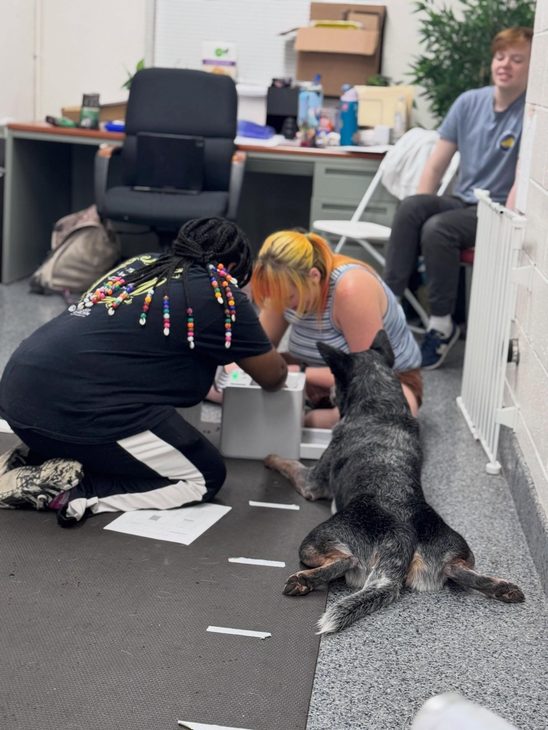
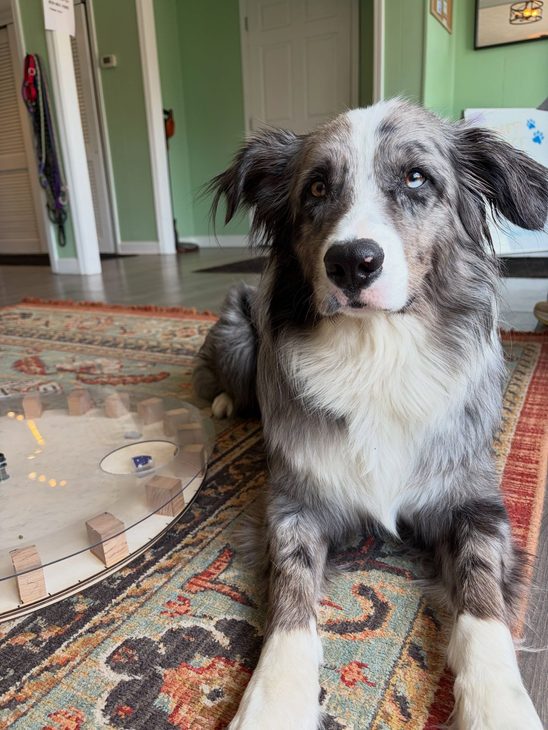
And we don’t study dogs in only one place. Many pet dogs come to visit our lab on Transy’s campus (if you’re interested in bringing your dog, click here for more information), but some of our projects take us out into the Lexington community.
For example, we currently have ongoing research at Canine Club doggie daycare and boarding facility, and the Lexington Humane Society as well!
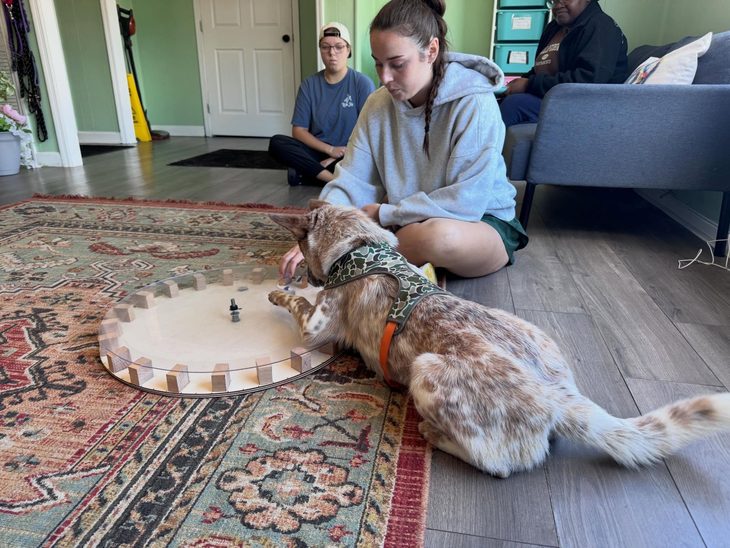

You may be surprised to hear that the Dog Lab isn’t always about dogs. We’re starting to study cats, too.
This new work is currently based at the Lexington Humane Society, where students spent hundreds of hours over the summer observing cat behavior—and dozens more working directly with cats through training. We’re just getting started, so stay tuned!
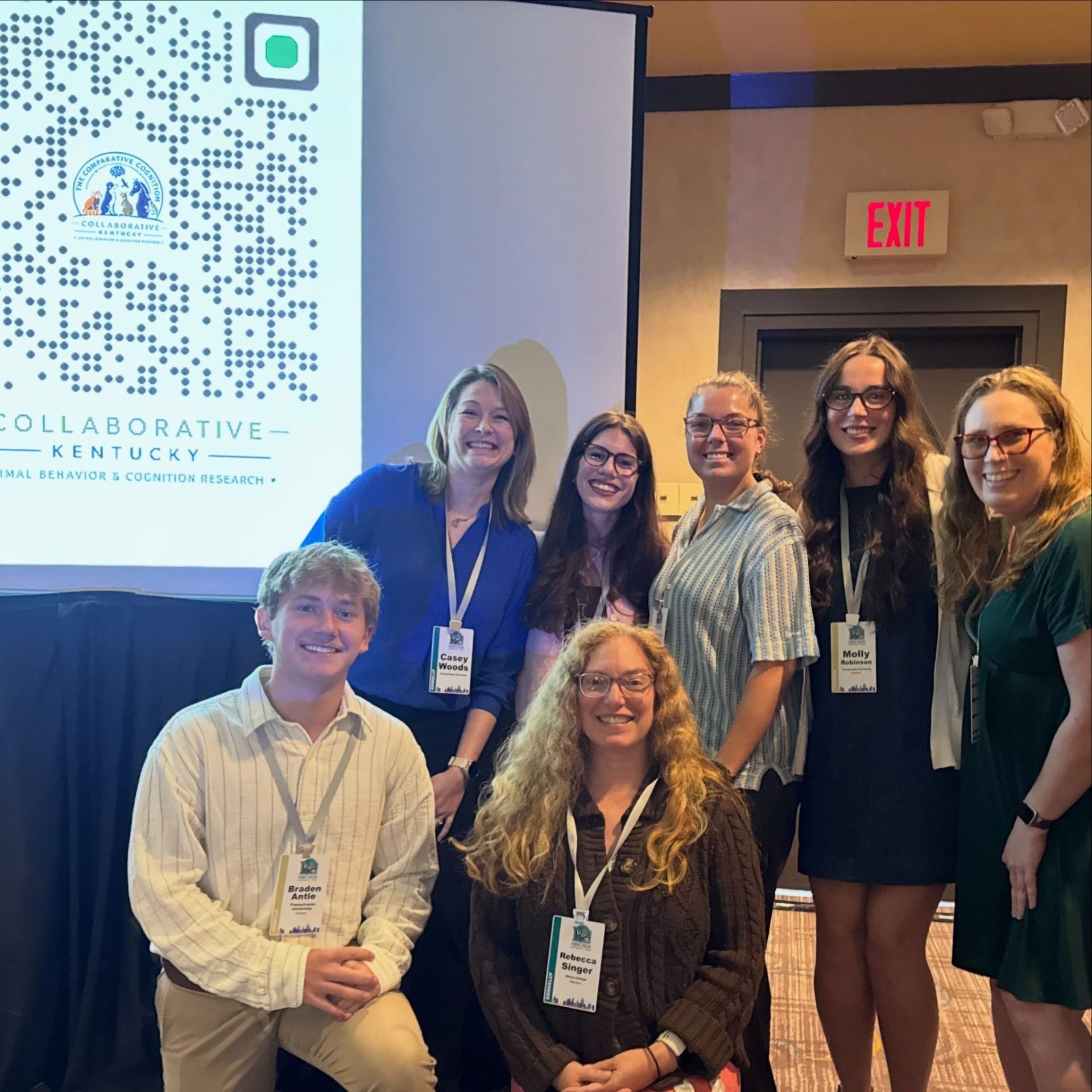
Our research is also highly collaborative. Through the Comparative Cognition Collaborative, we work with faculty and students at other colleges and universities, sharing ideas, developing projects together, and helping one another do research that would be difficult for any one small lab to tackle alone. Some collaborations involve collecting data for colleagues who don’t have access to a large population of dog participants; others grow into multi-site projects, conference presentations, publications, or entirely new research questions.