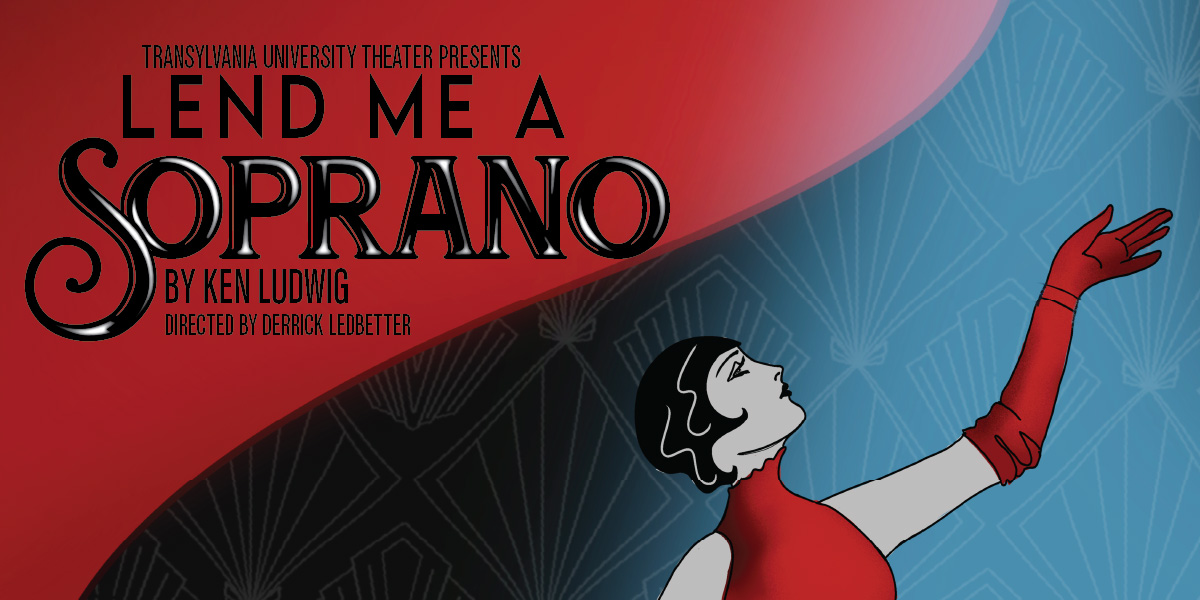
Behind the scenes of a great comedy, every detail matters. A door opens at the wrong moment, an unexpected guest appears and a carefully planned evening begins to unravel. In Transylvania University’s upcoming production of “Lend Me a Soprano,” the stage itself is part of the fun, with an Art Deco hotel suite, 1930s fashions and a design built to keep the action moving.
Bringing that world to life takes more than a script and a cast. It takes thoughtful design, hands-on craftsmanship and collaboration among students and faculty, all working to create a setting where the comedy can unfold. From the architecture of the set to the cut of an evening gown, the details help transport audiences to another era while showcasing the creative work happening behind the curtain.
A 1930s Art Deco hotel suite and tailored period costumes are setting the stage for Transylvania’s production of “Lend Me a Soprano,” which runs Nov. 11-15 in Little Theater.
A set designed for comic chaos
Professor Melissa Leigh Gilbert designed the three-level set serving as the prima donna’s suite with six doors positioned for the humorous entrances and exits that define the play.
“A lot of the comedy relies on that kind of farcical nature,” Gilbert said. “Part of it is you never know who might be coming through another door, and the characters don’t either. So there’s a lot of mistaken identity and tomfoolery that is inherent to the set.”
Written by Ken Ludwig and directed by Derrick Ledbetter, the play revolves around an opera company’s frantic improvisations to save a sold-out show after a world-famous soprano scheduled for a one-night-only performance goes missing.
The set is among the largest the department has built. A drafting class is converting Gilbert’s plans into files for the department’s computer-controlled cutting machine. Additionally, audience seating will face the opposite direction from the previous production, “Metamorphosis,” with curved banks for a good view of the action.
Costumes that capture the 1930s
Senior biology major Emma Smith, who received a fine-arts scholarship, is designing the costumes. For the 1934 setting, she researched period silhouettes over the summer, then moved through weekly production meetings, sketches and renderings before shifting to costume construction and alterations.
“The 1930s is one of my favorite fashion eras,” Smith noted. “Everything has a really strong emphasis on height and length and a feminine and masculine silhouette. Everything’s very fitted and tailored.”
Among the pieces is a bias-cut evening gown that Smith made as her high school senior final project; it’s being altered for an actress in the show. Others include a bellhop jacket and two “Carmen” costumes for the divas. The design team is also incorporating vintage pieces and tuxedos.
Creative perspectives behind the scenes
“It’s a creative outlet outside of my major,” said Smith, who is a data analytics minor.
Gilbert noted how having Smith and other STEM majors in the shop sparks fresh ideas — and how they often write their costume notes in the style of a lab journal. “They always bring in really interesting perspectives,” she said.