Reading the Game
by Stephen Russell
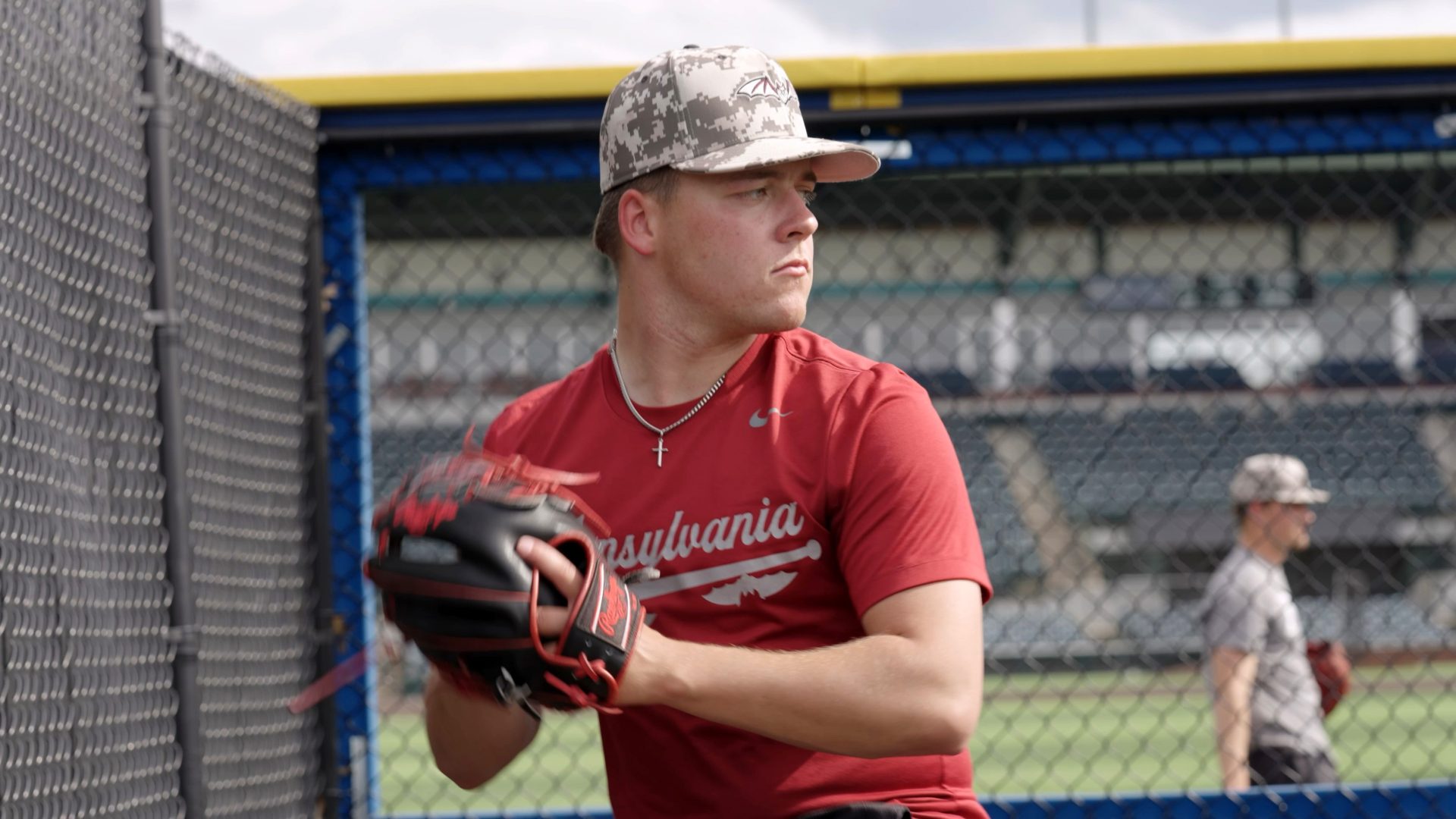
A pitcher settles on the mound, toes pressed into the clay. For an instant, everything is still.
Then his arm comes forward. The ball snaps from his fingertips and races toward home plate. In an instant, the ball is tracked by the hitter, caught by the catcher, clocked by the coach. The entire sequence takes less than a second.
Most pitches end there. At Transylvania University, though, some pitches have just started their life. Hours after the ball lands in the catcher’s mitt, students may be analyzing that same pitch in a data analytics classroom. Students may be examining how it moved through the air, where it left the pitcher’s hand and how hitters responded. A fleeting moment on the field becomes charts, visualizations and, ultimately, new questions.
Following the Data
High above the field at the Lexington Legends baseball stadium, where the Transy baseball team practices and competes, sits the TrackMan radar-based system used throughout Major League Baseball and many of the nation’s top collegiate programs. The technology tracks velocity, spin rate, release point, pitch movement, location and countless other details every time a baseball leaves a player’s hand.
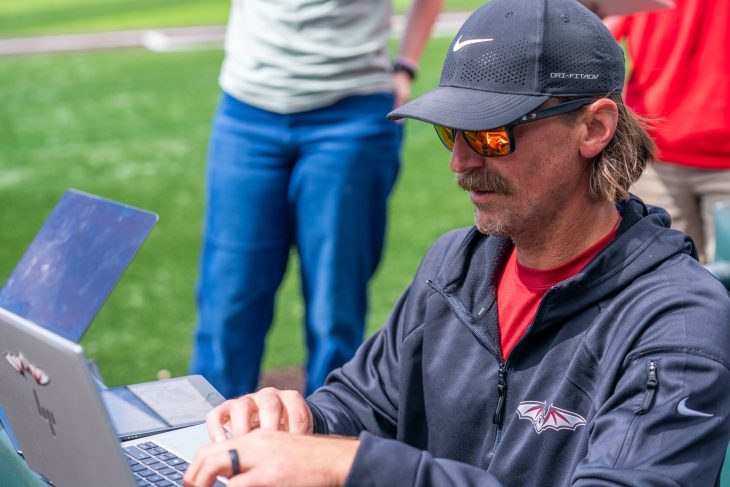
To explain how it works, Kay Hales, a Bingham Postdoctoral Scholar at Transylvania, points to a familiar example.
“When you’re watching the weather and they show the movement of a storm system, those are Doppler radars,” Hales says. “The Doppler radar is put into these TrackMan units, and so we’re able to track with a lot of precision the specific movements of the baseball.”
At many institutions, that information remains largely within the athletic department. However, at Transylvania, the data is shared from the stadium into classrooms, computer labs and conversations among students, professors, coaches and athletes who are all examining the same question from different perspectives.
For head baseball coach Zack Getsee, that collaborative spirit is what makes the project special.
“I think the biggest benefit for the university on this is that it is a true cross-collaboration between the athletics department and the math department,” he says.
I think the biggest benefit for the university on this is that it is a true cross-collaboration between the athletics department and the math department.
Zack Getsee
“There are so few times that you really get an opportunity to have student-athletes or just general students collaborating on something that they both have interest in.”
That collaboration was already producing results when Getsee asked Hales to take a closer look at rising junior pitcher Giancarlo Gonzalez’s performance. The analysis uncovered a pattern. Gonzalez’s change-up wasn’t producing the same results it once had, while his slider remained effective. The recommendation was simple: Throw more sliders.
The next time Gonzalez took the mound, he delivered six scoreless innings.
“We’re going to throw more sliders,” Getsee remembers thinking afterward. “And zero earned runs on Saturday. That’s awesome.”
For Hales, though, the most compelling part of the story wasn’t the result. Instead, it was how the answer emerged.
Learning From Real Questions
When the TrackMan system arrived on campus, it created exactly the kind of opportunity Hales hopes students have the chance to encounter during college.
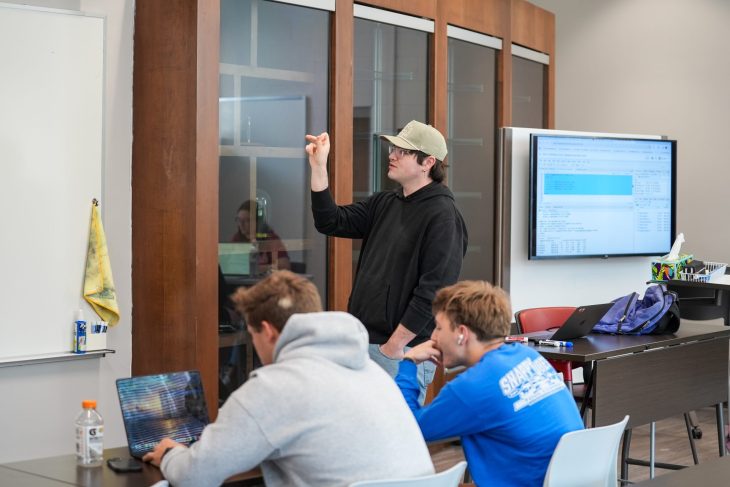
In Transy’s Data 1004 class, students learn the foundations of data analytics using R, a statistical programming language designed for visualization and analysis. During the spring, instead of working with carefully curated textbook datasets, they were handed something far messier and far more interesting: real baseball data containing thousands of pitches, hundreds of variables and all the imperfections that come with information collected in the real world.
“The main learning objectives for this project were to give them experience working with real-life data,” Hales says. “Real-life data isn’t as clean as practice datasets.”
Some pitches had been tagged incorrectly. Some observations were incomplete. Other numbers raised questions that couldn’t be answered without deeper investigation. The challenge wasn’t simply running calculations. It was determining what the data actually meant.
Students examined release points, pitch movement, velocity, spin rates and hitter outcomes as they searched for patterns, questioned assumptions and learned that useful analysis often begins with curiosity.
One group noticed that a pitcher’s data appeared to be stabilizing over time. At first glance, the trend looked encouraging. But after digging deeper, the students discovered that several pitches had likely been classified incorrectly. By questioning the data rather than accepting it at face value, they uncovered a problem that changed the interpretation entirely.
For Hales, moments like that capture the heart of the discipline.
“So much of what data analytics and data science and all of what we do is learning how to ask questions,” Hales says.
When the Players Are Your Classmates
For Emma Smith ’28, the project changed the way she viewed data and its possibilities.
“I learned that data is everywhere,” she says. “There’s a lot of different applications that I didn’t realize it had outside of the world of math.”
What surprised her most was how meaningful the work felt.
“It made the learning experience more authentic and real. It felt like I was actually creating a product that could be used. It wasn’t just busywork.”
Unlike a traditional assignment, the audience wasn’t a professor grading an exercise. Coaches might use the information. Players might ask questions about it. The work had consequences beyond the classroom, and that changed how students approached it.
It made the learning experience more authentic and real. It felt like I was actually creating a product that could be used. It wasn’t just busywork.
Emma Smith ’28
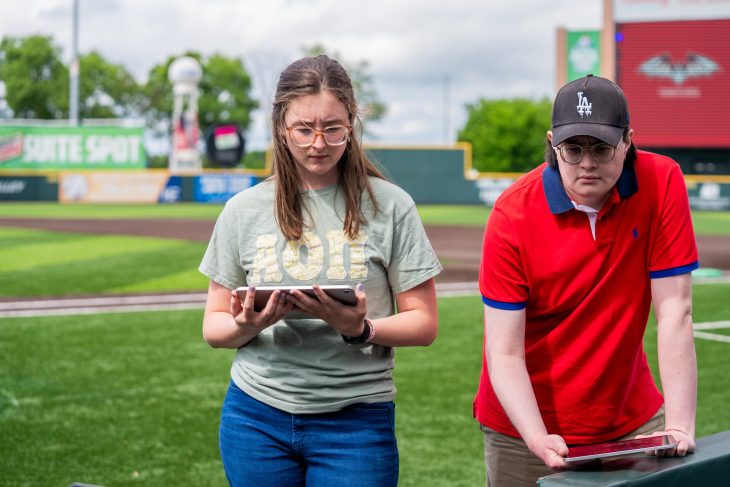
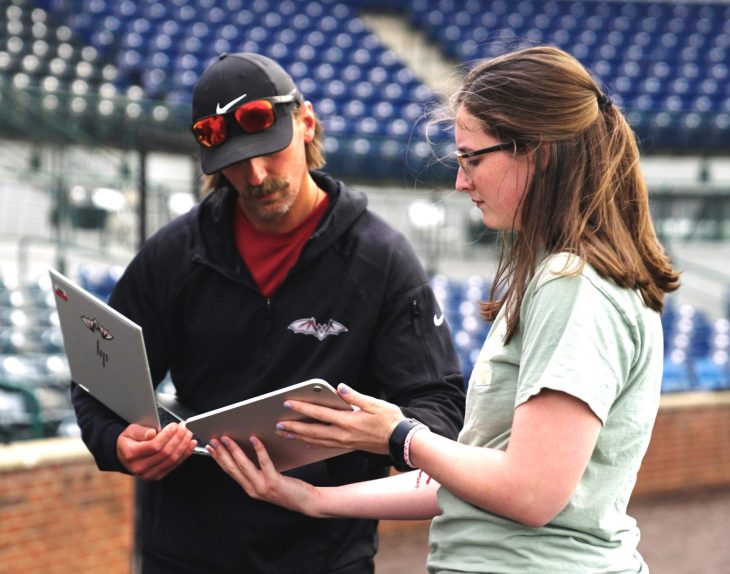
“I definitely wanted to make the best product that I could,” Smith says. “I put a lot of effort into how my projects appeared and how easy they were to understand so that they could actually be used.”
For Ethan Lawhorn ’26, the experience felt personal for a different reason.
“Those are my classmates and people I know on that field,” he says. “I want to give my school the best chance at winning.”
It was that connection that transformed the project in ways no textbook dataset could. Students weren’t analyzing anonymous athletes from a professional database. They were studying classmates’ pitches. The people behind the numbers sat beside them in class, passed them on the way to lunch and shared the same campus community. Before long, those conversations extended beyond scheduled class time.
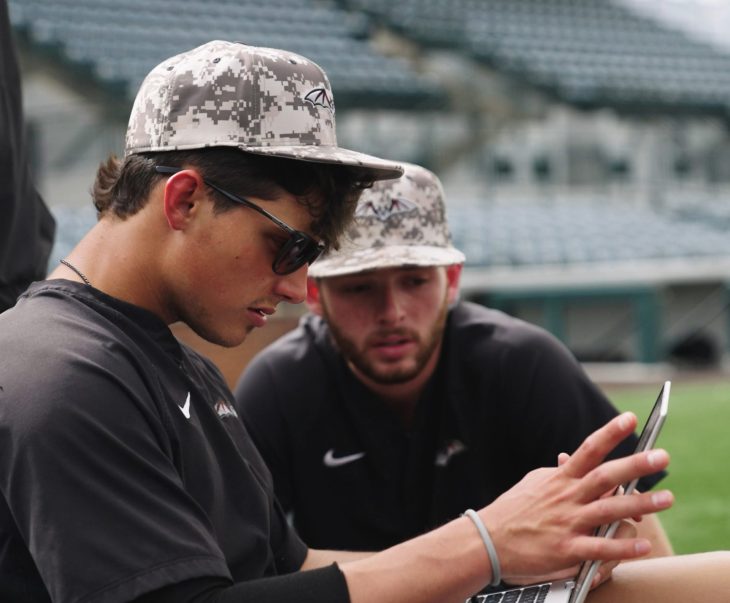
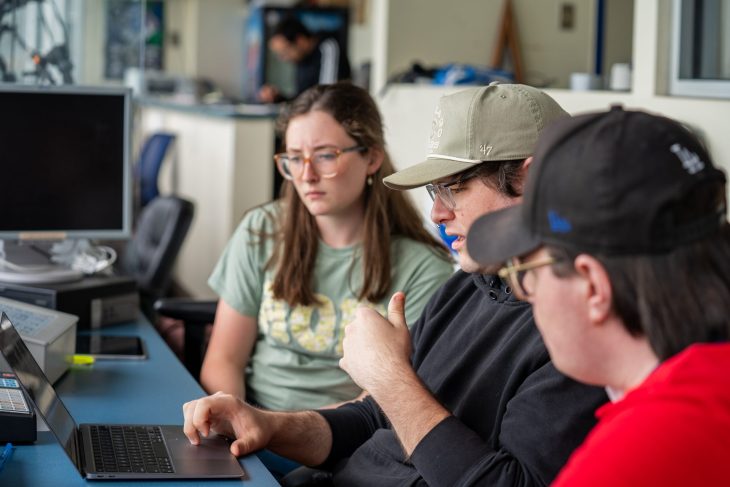
Hales frequently noticed students sitting with baseball players in the cafeteria, discussing visualizations, asking questions and comparing perspectives. A player might explain how a pitch felt leaving his hand. A student might point to a trend hidden in the data. Coaches wanted to know what students were finding, while students wanted feedback from the athletes behind the numbers.
“I pretty frequently see some of our students sitting at the cafeteria talking to them about it,” Hales says. “Asking them, if we’re doing it this way, how would you like to see this done?”
The exchange became collaborative in the truest sense.
“They got to talk about it and give it to the people that they go to school with,” Hales says. “‘This is what I did with your pitches. This is you.'”
Reading the Same Game
For coach Getsee, those conversations represent something larger than baseball. Too often, athletics and academics operate in separate worlds. This project challenged those boundaries.
A student who has never played baseball can identify a trend that helps a pitcher improve. A pitcher can provide context that helps a student understand the numbers. Professors and coaches can approach the same question from different directions and arrive at a better answer together.
“We’re creating a path for them to actually be students together,” Getsee says.
Data students already assist with TrackMan operations during games and bullpen sessions, and new internship opportunities are on the horizon. Beginning next year, students will be able to earn internship credit while working directly with the baseball program and gaining hands-on experience with the same kinds of technologies used throughout professional baseball.
Future courses will incorporate larger collections of baseball data, allowing students to explore advanced analytics, predictive modeling and machine learning while working with information generated on their own campus.
“We’re going to use this baseball data with over a year of collecting it by the time we teach this class,” Hales says. “You’re going to get to apply machine learning models and strategies and machine learning inferential thinking to baseball data that will be incredibly marketable.”
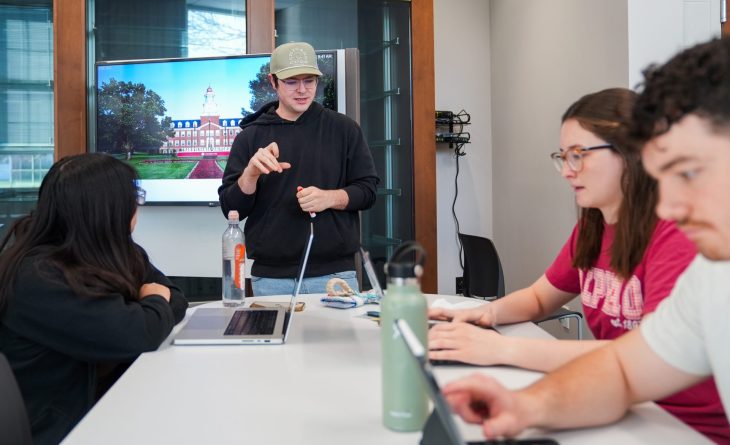
I can’t think of anywhere else you can go and do both of those things together. You don’t have to be a statistics major. You don’t have to be a math major.
Kay Hales,
Bingham Postdoctoral Scholar
The opportunities extend beyond mathematics and data science. Students interested in health and exercise science can explore biomechanics. Students interested in business can examine sports operations and decision-making. Others gain experience working with real stakeholders and real problems.
For students considering careers in analytics, sports, technology or research, the experience offers something increasingly valuable: the chance to work with real-world data while they’re still undergraduates.
“I can’t think of anywhere else you can go and do both of those things together,” Hales says. “You don’t have to be a statistics major. You don’t have to be a math major.”
On any given afternoon, a baseball still travels just 60 feet, 6 inches.
At Transylvania, the journey goes much farther. It might end at a cafeteria table, where a student and a pitcher sit side by side — one discussing the spin rate on a screen, the other remembering how the ball felt leaving his hand — both learning to read the same game from different angles.