Changing Course
by Julie Martinez
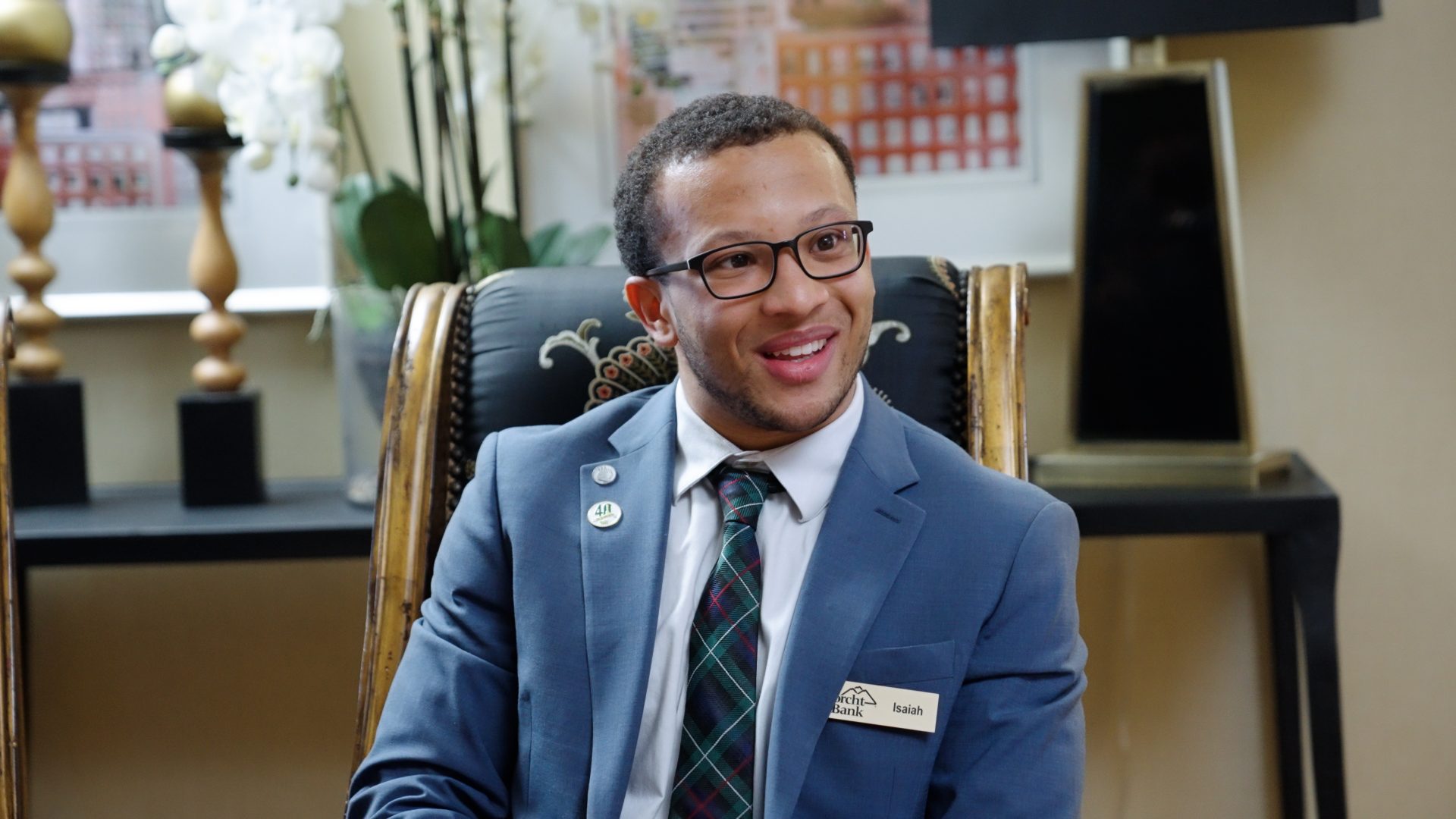
On his first day at Forcht Bank, Perkins expected to shadow. Instead, he was led to a corner desk with his own laptop, name tag and company gear. Meetings were already on his calendar.
“I had my own corner desk and my own computer. I came in at the same time as everyone and did the same work, like basically a member of the bank,” he said.
The assignment was substantial. Kimberly Bussell, marketing director for Forcht Bank, worked with Perkins. She asked Perkins to research community banks, national banks and financial technology companies, then evaluate how they appealed to younger customers. The goal was simple: understand what his generation valued and where Forcht could improve.
The project required more than surface-level analysis. Perkins examined brand voice, digital engagement strategies and customer experience models, then synthesized his findings into a professional presentation.
At Transy, we focus a lot on research. Being able to identify where to find pictures, where to get my information, how to do research for a marketing project — that’s been huge.
Isaiah Perkins ’26
“At Transy, we focus a lot on research,” he said. “Being able to identify where to find pictures, where to get my information, how to do research for a marketing project — that’s been huge.”
The skills he had developed in business classes, including gathering data, building strategic arguments and communicating ideas clearly, transferred directly into the workplace. The internship gave him an opportunity to put those skills into practice in a professional setting.
At the same time, he saw the power of relationships in a profession built on trust. He met with graphic designers, videographers and marketing strategists. He had breakfast with senior leaders who shared their career paths. He traveled with the marketing team to film a commercial, watching a script come to life alongside an actor and a canine co-star.
“In banking, you form a lot of connections,” Perkins said. “I learned how to manage my connections, manage my relationships and then build those up as well.”
A Chance to Pivot
For a student reimagining his future, that lesson was foundational. Just a few years earlier, he had arrived in Lexington with a very different future in mind. He planned to become an ophthalmologist and had chosen Transylvania University in part because it offered both a competitive swim program and a strong path toward medical school.
Then, partway through college, the plan shifted. Perkins was diagnosed with glaucoma in his left eye. The diagnosis forced him to reconsider a future he had spent years pursuing.
Ophthalmology depends on precision and the kind of microscopic work his condition would make difficult. Suddenly, the profession he had imagined for himself was no longer realistic. For many students, a setback like that might raise a difficult question: What now? For Perkins, the answer began with the people around him.
A Campus Where Relationships Matter
When Perkins first visited Transylvania as a prospective student-athlete, he was looking for a place where he could continue swimming while preparing for a career in medicine. What he found was a campus where relationships mattered.
Walking through campus and meeting members of the university community, he noticed professors talking with students and people greeting one another by name. The atmosphere felt connected, welcoming and personal.
“I loved the closeness between the professors and the students,” he said.
For someone who wanted a smaller college experience, it felt like the right fit.
Now, as his plan was forced to change, the challenge wasn’t simply choosing a new major. It was reimagining a future he had spent years building toward. A career that once felt certain was suddenly out of reach, forcing him to reconsider not only what he wanted to do but how he might still contribute to the field that had drawn him to medicine in the first place.
As he explored alternatives, conversations with professors and advisers helped him begin looking beyond what had been lost and toward what remained possible. He found himself drawn to business and eventually to health administration, a field that would allow him to stay connected to healthcare while focusing on leadership and organizational strategy.

Finding the Connections
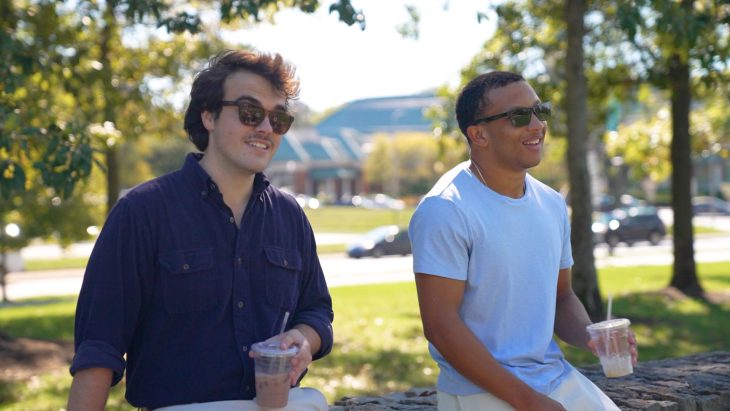
The next turning point came through a series of conversations. When Perkins connected with Ray Daniels through Transylvania’s Center for Academic and Professional Enrichment, he was looking for internship opportunities and professional experience. Daniels, who serves as special assistant to the president at Transylvania, became a mentor, doing more than just giving career advice. Daniels gave him his phone number, and the two quickly developed a routine.
“We met at least once a week for the next two months after that. We went out to eat, and just walked around campus. We got to know each other,” Perkins said.
They talked about goals, strengths, interests and possibilities for the future. Working alongside Pre-Health Adviser Robin Prichard and others who understood Perkins’ growing interests in both healthcare and business, Daniels helped identify opportunities that aligned with his evolving career goals.
One of those conversations led to an introduction, and another door opened.
An Internship to Open Doors
Before Perkins ever interviewed for an internship, he sat down for breakfast with Larry Forester of Forcht Bank. What began as a networking conversation quickly became something more meaningful. Forester shared his own professional journey and talked candidly about careers, relationships and opportunities within Kentucky’s business community.
For Perkins, it was his first real glimpse into a professional world he hadn’t previously considered. It also reinforced something he was beginning to learn throughout his time in Lexington: Opportunities often grow out of relationships. Forester believed Perkins could be a good fit for the organization and encouraged him to continue pursuing the opportunity.
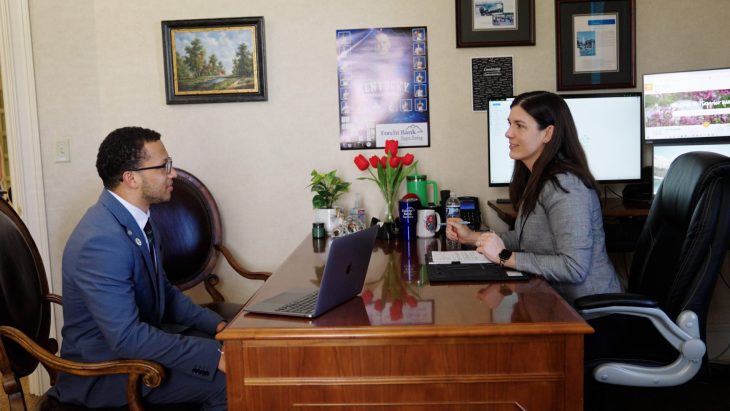
After meeting with Bussell, Perkins earned a summer internship that immediately exceeded his expectations. Rather than assigning routine tasks, the marketing team asked him to tackle a question with real significance: How can a community bank better connect with Generation Z consumers?
The project gave Perkins an opportunity to apply what he had learned in the classroom while gaining exposure to nearly every corner of the organization. He met team members across departments, attended strategy meetings and watched campaigns move from concept to execution.
One project even took him to Red River Gorge, where he joined the team during the filming of a commercial promoting student banking products. The deeper he became involved, the more he realized he wasn’t simply observing the work. He was contributing to it.
At the end of the summer, Perkins stood before Forcht Bank’s leadership team and presented the findings from his research. For weeks, he had studied competitors, analyzed trends and developed recommendations about how the bank could better connect with younger consumers. Now he was the one leading the conversation.
“What stood out the most was probably his eagerness to learn,” Bussell said. “He wanted to get in and learn every aspect of everything that we do.”
The experience proved valuable not only for Perkins but for the bank itself.
“We really learned quite a bit from him,” Bussell said. “He knocked it out of the park.”
What stood out the most was probably his eagerness to learn. He wanted to get in and learn every aspect of everything that we do.
Kimberly Bussell,
Forcht Bank
The internship had begun as an opportunity for a student to learn from experienced professionals. By the end of the summer, the learning was flowing in both directions.
For Perkins, the moment represented more than a successful presentation. It was proof that the future he once feared losing had not disappeared. It had simply taken a different shape.
Looking Ahead
This fall, Perkins will begin pursuing a master’s degree in health administration at the University of Kentucky. The path that brought him there looks very different from the one he imagined when he first arrived in Lexington carrying plans for medical school.
“I feel like Transy has prepared me enormously for this opportunity,” he said.
The STEM foundation, the business training and the liberal arts courses sharpened his thinking, communication and understanding of people. More than coursework, Perkins points to relationships.
The pivot that once felt uncertain now reads as evolution. Perkins will not spend his career peering through a microscope. Instead, he plans to help lead health systems, shaping policy, managing resources and improving access to care.