
A global collaboration rooted in Kentucky
A growing network of animal cognition researchers across central Kentucky is creating new opportunities for students, including one who traveled more than 4,000 miles to be part of it.
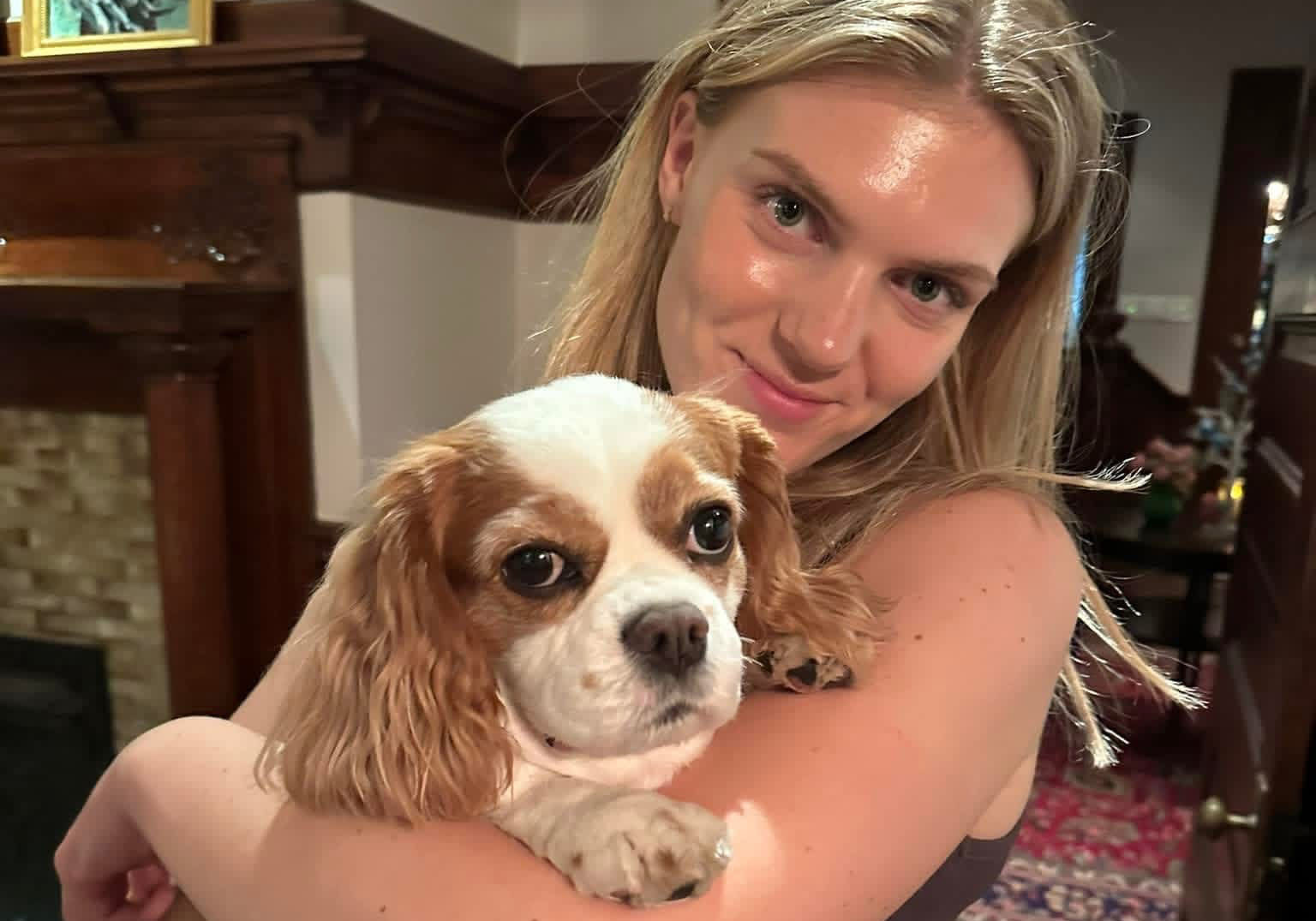
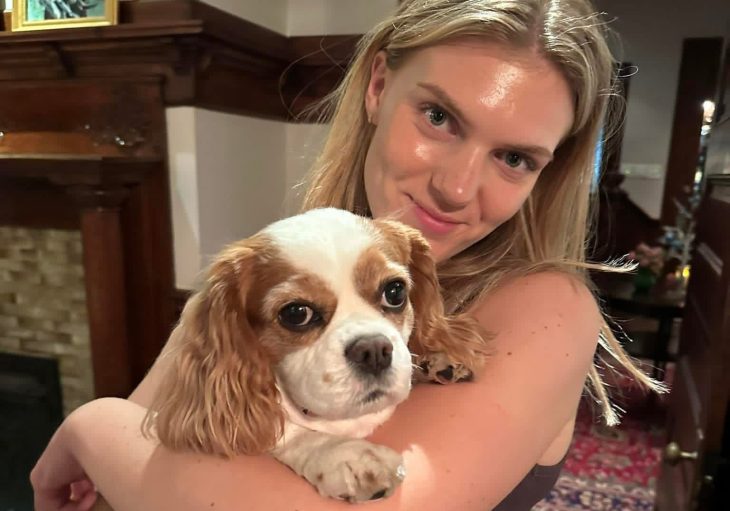
Frida Oster, a graduate student at Uppsala University in Sweden, is spending the semester at Transylvania University’s Dog Behavior and Cognition Lab through the Comparative Cognition Collaborative, a regional group that connects faculty, students and community partners interested in animal cognition research.
Learn more about Transylvania University.
The collaborative includes researchers from Transylvania, the University of Kentucky, Berea College, Centre College and Eastern Kentucky University, along with community members from organizations such as the Humane Society. The group meets monthly to share research, build partnerships and expand access to hands-on learning.
From pharmacy to dog cognition research
For Oster, the opportunity connects directly to her academic background.
“As a pharmacy student, we learn that animals are an important part of drug development, and animal studies are required when developing a new drug,” Oster said. “Since this is the case, it is also important to understand the animals and always think about the ethics of using animals as models.”
Her interest in pharmacology, especially neuropharmacology, led her to explore how medications influence behavior.
Explore academic programs at Transylvania.
“I found myself drawn to Dr. Furlong’s studies about animal cognition, and specifically canine behavior,” she said. “We got in touch and decided to collaborate and conduct a study where we try to understand how dogs’ behavior can change when they are on behavioral medication, such as fluoxetine.”
Learn more about professor Ellen Furlong’s work and background.
Inside the Dog Behavior and Cognition Lab
At Transylvania, Oster is helping lead a study on how behavioral medications affect dogs’ impulse control and decision-making.
Students interested in hands-on research can learn more here.
“Our project is really fun and involves a lot of cuddling with the dogs and giving them a fun time in the lab,” she said. “The dogs are usually in the lab for an hour, and that hour includes four impulse control tasks, four surveys for the owners to complete, and a lot of hugs and treats.”
The research is structured, but it is also deeply relational.
“I am always thrilled to meet all the dogs and owners, and of course to work with the students in the lab as well as Dr. Furlong,” she said. “We have a lot of fun and create many happy memories and laughs in the lab.”
Working closely with dogs has shifted her perspective.
“Every dog is different, and working with dogs has really made me think about them as a species with a lot of feelings and thoughts,” she said.
A different kind of college experience
Oster’s experience in Kentucky has highlighted key differences between academic cultures.
“I am studying at Sweden’s largest university, Uppsala University, with more than 50,000 students,” she said. “But it is not the size of the university that is the biggest difference when I came here to Transy. It is the spirit and how Transy feels more like a place where you meet friends, hang out and live.”
“In Sweden, universities are only for academics and feel more like a job you just visit during the day,” she added.
Discover student life at Transylvania.
At Transylvania, that sense of community extends beyond campus through the Comparative Cognition Collaborative, which also connects classrooms, research labs and faculty learning groups.
Why dog cognition matters
Oster’s work contributes to a broader understanding of how behavior, biology and medication intersect. Studying dogs offers insight not only into animal behavior, but into cognition more broadly.
Through structured tasks and observation, researchers can better understand how medications like fluoxetine influence impulse control, decision-making and emotional responses.
Learn more about science programs.
A transformative research experience
For Oster, the experience has been both academically and personally meaningful.
“I am very honoured to have had the opportunity to come all the way from Sweden to Lexington to meet new people, live a different lifestyle, gain a lot of experience from the dog lab, and hopefully earn a good degree through my master’s thesis,” she said.
As the Comparative Cognition Collaborative continues to grow and prepares to present its model at an upcoming conference, Oster’s experience reflects the power of interdisciplinary, cross-institutional collaboration. Start your journey at Transylvania:
Visit: transy.edu/admission
Apply: transy.edu/admission/apply