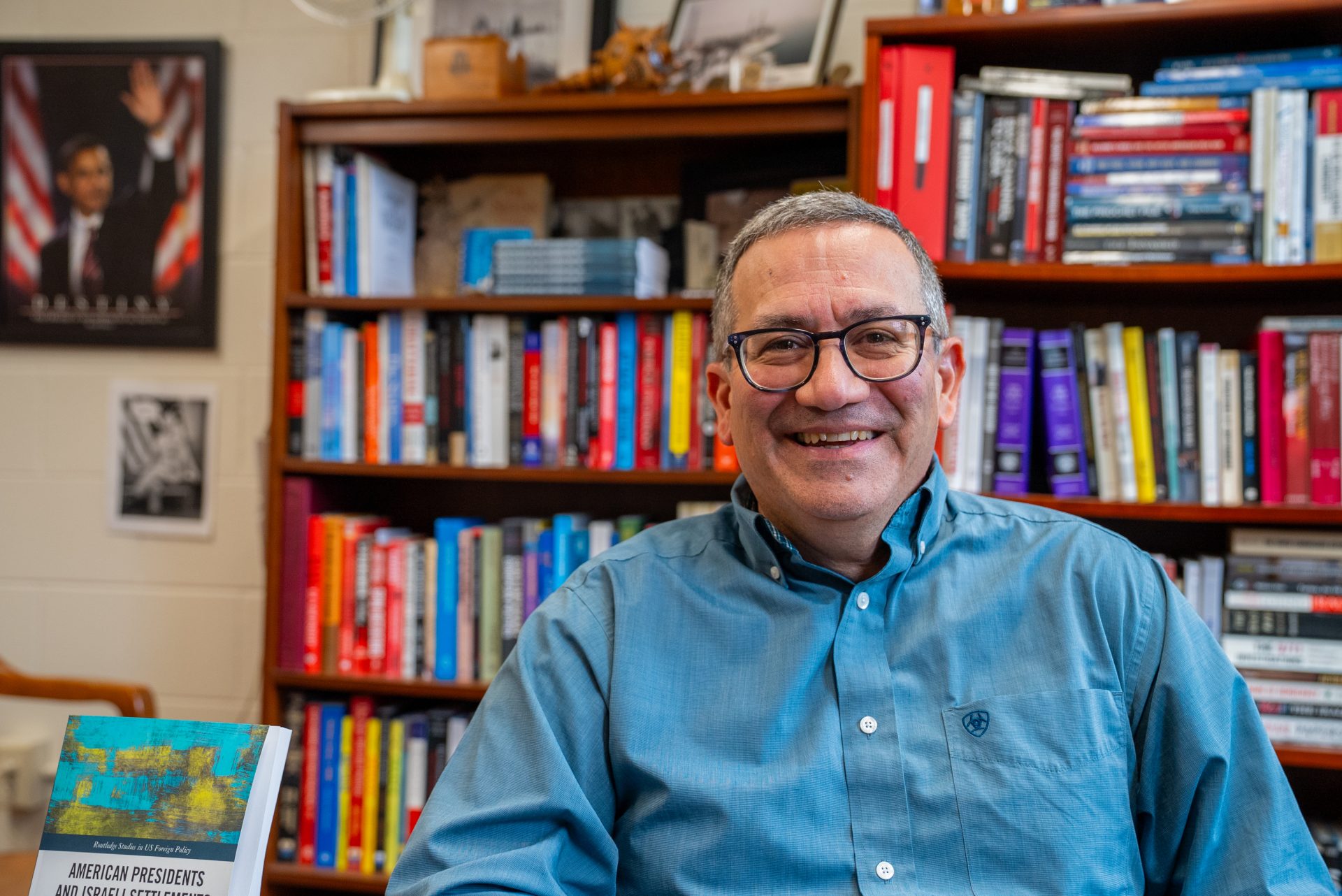
Professor of Political Science
Political science is about the human endeavor, about how we should constitute a government and what is right or best in a society.
Michael Cairo
Professor of political science
and Bingham Endowed Chair

About Michael Cairo’s Work
For Michael Cairo, political science is inseparable from the larger questions at the heart of a liberal arts education.
“Learning to be a free thinker on your own and make your own decisions” is central to his approach. In his classroom, students read closely, write regularly, and bring their own interpretations into discussion.
“Students bring the notes that they have from their own mind on how they interpret what we’re reading.”
Those conversations form the core of the course, testing ideas, refining arguments, and learning to engage differing perspectives.
For Cairo, teaching excellence is measured not by coverage of material but by student growth.
“Teaching excellence is about getting students to realize their fullest potential.”
His courses in international politics and U.S. foreign policy ask students to grapple with questions of conflict, ethics, and global relationships. As they examine issues of war and diplomacy, they are also asked to reconsider assumptions, including their own.
Students learn that political questions rarely have simple answers. Understanding them requires careful reading, sustained attention, and a willingness to see the world from more than one point of view.
For Cairo, that work is inseparable from his role as a scholar. He brings his own research into the classroom and invites students into the process, working alongside them to analyze documents, interpret evidence, and build arguments.
“I describe myself as a teacher-scholar,” he says, “because you can’t be an excellent teacher without pursuing the scholarship that keeps you relevant in your field.”
Through that work, students see what it means to engage ideas at a deeper level, not just learning about political science but practicing it. They move from interpreting texts to contributing to conversations, developing the habits of mind that define both strong scholarship and effective teaching.