By this point, the decision has been made.
What often goes unspoken is what comes next. Not the logistics of move-in or course registration, but the larger question that sits underneath it all.
What is this experience going to build?
Families ask it in practical terms. Students feel it in quieter ways. It shows up in conversations about the future, about work and about independence. It shows up in the realization that college is not just something to complete. It is something that shapes what comes after.
At Transylvania, that question has a clear answer.
This is an environment designed to build readiness. Not eventually, but steadily, from the moment a student arrives.
Preparation begins with expectation
One of the first things students notice at Transylvania is that they are expected to participate.
Classes are small by design, with a student-to-faculty ratio of about 11 to 1, which means there is no space to disappear into the background.
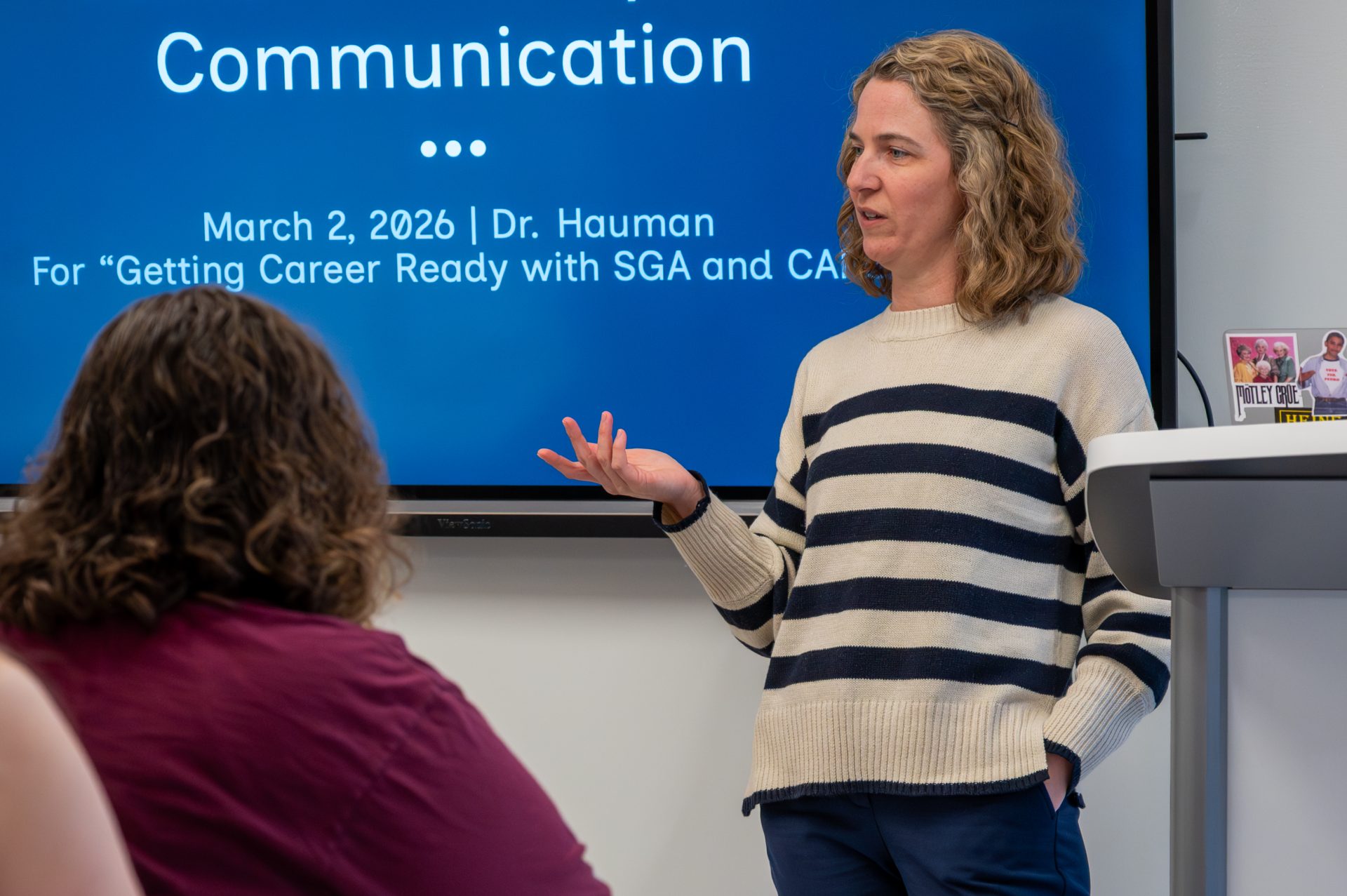
A typical class is not something to sit through. It is something to contribute to. Students are asked to speak, to question and to defend their ideas. That expectation can feel unfamiliar at first, but it is also where growth begins.
Faculty know their students. They follow their progress. They push them to go further than they might on their own.
Over time, this changes how students think about themselves. They begin to see that their ideas have weight. They become more comfortable navigating complexity. They learn how to communicate clearly, even when the answer is not obvious.
Those are not abstract skills. They are the foundation of professional confidence.
Experience is not separate from the classroom
At many institutions, experience comes later.
At Transylvania, it runs alongside everything else.
The university’s approach to career development connects students with internships, alumni and advising early, often within the first year.
This means a student might spend part of the day in class discussing a concept and another part of the day seeing how that concept plays out in a real organization in Lexington.
That proximity matters.
The campus sits just blocks from downtown, placing students within reach of hospitals, law offices, nonprofits, financial institutions and creative industries.
These are not occasional opportunities. They become part of a student’s routine.
About 40 percent of recent graduates completed internships, and the university continues to expand access so that more students can gain that experience before they graduate.
When students graduate, they are not encountering professional environments for the first time. They have already been part of them.
Outcomes reflect the system behind them
The most direct way to understand whether a college prepares students is to look at what happens after graduation.
At Transylvania, 95 percent of graduates are employed or enrolled in graduate or professional programs within six months.
That number reflects something important.
Students are leaving with direction. They have tested their interests, built relationships and developed the confidence to take the next step.
Graduates entering medical and law school are admitted at notably high rates when recommended, which reflects both academic preparation and strong faculty support.
These outcomes are not the result of a single program. They are the result of a system that consistently connects learning with action.
Financial readiness is taught, practiced and applied
Financial readiness is often treated as something students figure out after they graduate.
At Transylvania, it is addressed directly while they are still here.
The university has launched a comprehensive financial literacy initiative in partnership with WesBanco that gives students access to structured, practical financial education. Through a digital platform, students work through topics that shape real-life decision-making, including budgeting, credit management, investing and long-term financial planning.
What makes this different is how it is delivered.
This is not a one-time workshop or a passive resource. The program is reinforced through mentorship, in-person workshops and classroom engagement led by financial professionals. Students are not only learning concepts. They are applying them, asking questions and seeing how financial decisions work in real situations.
This reflects how Transylvania defines preparation.
The university’s leadership has emphasized that a liberal arts education should prepare students not just for their first job, but for a lifetime of thoughtful decision-making. Through this partnership, students gain access to practical financial knowledge that supports the real-world readiness the institution prioritizes.
Faculty and staff reinforce the same goal. The program ensures students leave with both knowledge and confidence, able to navigate financial decisions with a clearer understanding of risk, opportunity and long-term impact.
For families, this matters.
Financial readiness is not only about earning potential after graduation. It is about whether students understand how to manage what they earn, how to plan for the future and how to make informed decisions over time.
At Transylvania, those skills are taught, reinforced and connected to real-world experience before students graduate.
Why this model holds its value
Transylvania was founded in 1780, and its approach has remained centered on a liberal arts education that develops the whole student.
That model continues to hold value because it aligns with what the modern workforce demands.
Employers consistently emphasize communication, critical thinking and adaptability. These are the skills that allow graduates to move across industries, take on leadership roles and navigate change.
At Transylvania, those skills are practiced daily, in classrooms, in internships and in conversations with faculty and peers.
That combination is what gives the education its lasting value.
What this means right now
This period between commitment and move-in can feel uncertain.
There is time to think, to question and to imagine what the next four years will look like.
What is often less visible is that the structure is already in place.
Students are not arriving at Transylvania to figure everything out on their own. They are stepping into an environment designed to guide that process.
What matters most is how they choose to engage with it.
Looking ahead
In a few months, this will no longer be theoretical.
Students will walk into classrooms where they are expected to contribute. They will begin forming relationships that shape their thinking. They will encounter opportunities that ask them to apply what they are learning in real situations.
At first, it may feel like a series of small steps.
Over time, those steps begin to connect.
That is how preparation happens.
Not all at once, but steadily, until it becomes something more than readiness.
It becomes direction.
More questions? We are here to help. Find resources here.