I’ve had the joy to teach and learn with students in all kinds of writing courses.
These include first-year seminars, often focused on topics such as music and platform economics; explorations in classical rhetoric, often grounded in case studies concerning representations of the prison-industrial complex; writing for nonprofit organizations, which sometimes, delightfully, lead to impactful internships and careers in service to others; travel writing, with an emphasis on how digital tools affect the ways we conceptualize travel, otherness, spaces and more; writing as a way to learn about aesthetics: What do we like? Why do we like what we like?; and creative nonfiction and poetry as a way to understand a complex, nuanced world and to help develop our collective sense of wonder.
In each of these courses, I work with students to think about a variety of rhetorical principles: invention, arrangement, style, modes of delivery, audience needs, genres and more. We explore course content, but we also dream, draft and develop our own texts.
In other words, we take time to practice some skills that date back millennia, but often for very contemporary purposes and often as a way to help deepen our sense of purpose in the world. By conceptualizing a class and a classroom as a space to practice ideas, we can learn a great deal about the complex work we do as makers and communicators.
Writing for the arts and community engagement
For example, my recent Special Topics: Writing for the Arts course worked in concert with four different Lexington-based arts organizations to develop digital and print materials for marketing and branding needs. We took time to think about how arts programming plays into the social, civic and economic health of communities like ours, with wonderful guests from local government and arts funding programs. Along the way, we learned about the rhetorical and communicative work that takes place every day, behind the scenes, in arts-aligned initiatives and businesses.
The vast majority of that work is collaborative by design: people making things together, using feedback and conversation to drive a purposeful and, hopefully, fulfilling process.
Rethinking writing, feedback and collaboration
In all my time as a writer and a teacher of writing, I’m often amazed at a misconception about this difficult, complicated, wonderful thing called writing. For a variety of complicated reasons, we often mistakenly equate feedback and even collaboration as something remedial; that writing is primarily an individualized act; and that feedback is merely correction and often only at the end of a process.
But the work that we explored with and made with civic leaders and local professionals via Writing for the Arts, and in other WRC courses too, offers real evidence for the fact that writing is a social activity and that conversation can be a catalyst for creativity throughout any sort of writing process.
The writing center as a space for conversation
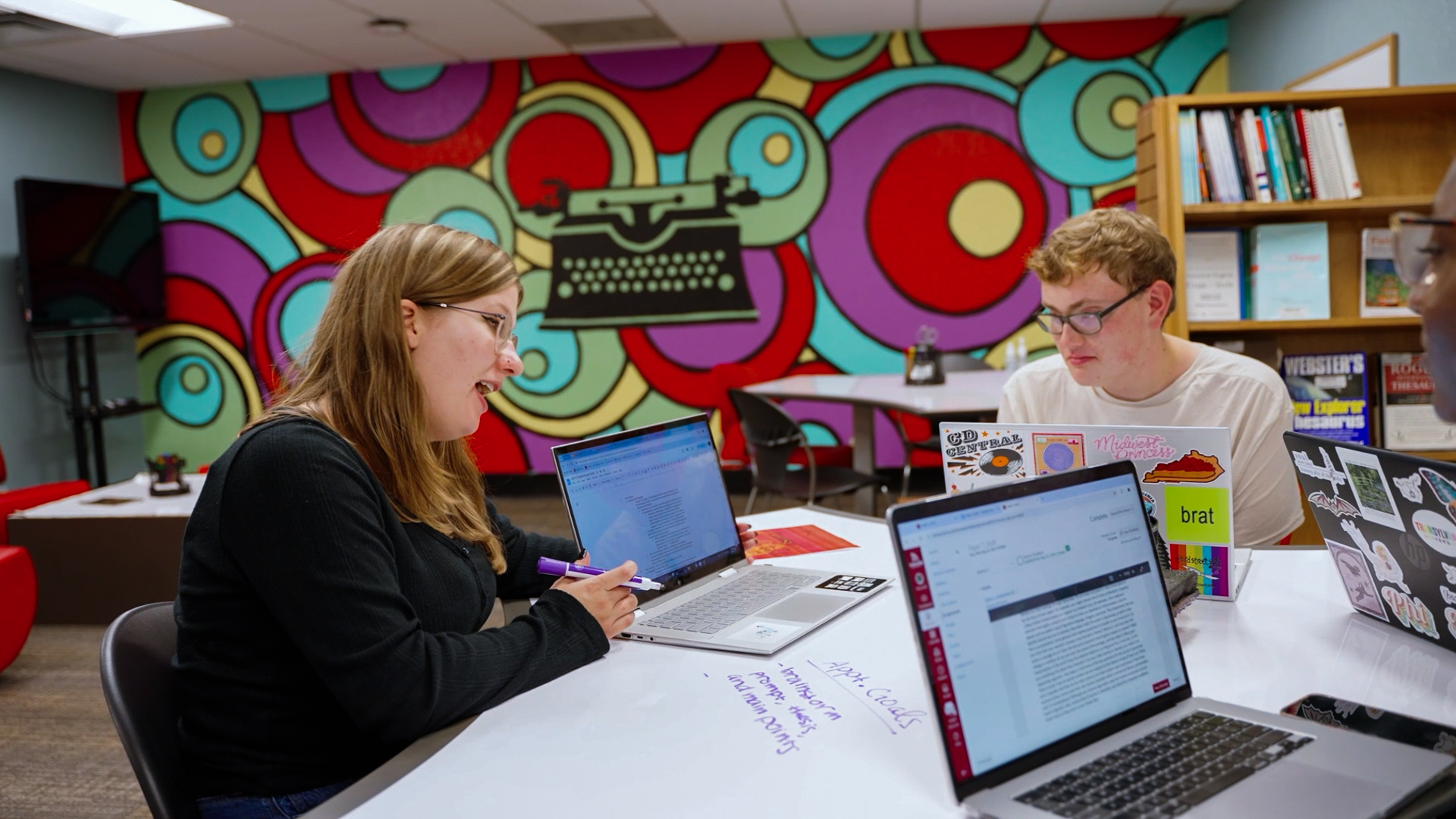
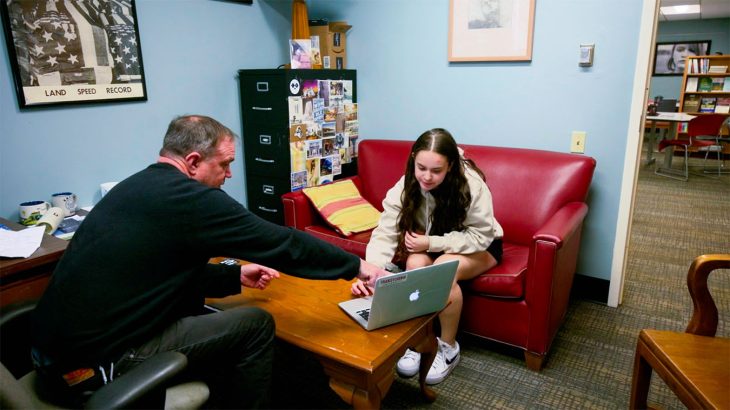
I see this same engaged sense of conversation-as-collaboration almost every day in our Writing Center, where faculty-nominated students from across majors and interests work with peers to develop all kinds of academic and creative projects. I’ve been honored to serve as TUWC director for almost 20 years. Students find real value in working with TUWC peer staffers throughout a process: developing ideas, outlining possibilities, thinking critically about parameters, revising as a form of learning and growing.
It’s part of figuring things out and having accessible spaces to do so. It’s like “a personal trainer for writing,” someone once told me. Such a student-centered commitment to process helps demystify academic writing and serves both experienced and lesser-experienced writers well, as suggested by studies at other small liberal arts colleges such as Pomona. At its best, thoughtful, sustained collaboration can engage our deep sense of curiosity and our human need for connection.
TUWC programming such as our Course-Embedded Consulting initiative, in which TUWC staffers are assigned to specific sections of first-year seminars, working together on a project for an entire term, has earned recognition from beyond campus as well: a Martinson Award for Excellence in Small Liberal Arts Writing Program Administration and a Southeastern Writing Center Achievement Award. Such student collaborations not only produce better writing, but also help heighten student engagement with readings, course discussions and perhaps even broader campus engagement.
A culture of collaborative learning
As a long-time faculty member and writing teacher, I’m pleased to see how collaboration fuels creative thinking all across campus: in science labs and theater spaces; in imaginative political science classes that use gaming as a form of interaction; via faculty development in our Bingham Center for Teaching Excellence; in working with ACE peer learners and Transy librarians and more. We’re a special place for making, writing and composing knowledge.
Transy’s learning culture, grounded in collaborative pedagogy, gives students a range of active spaces in which to practice and develop their own rhetorical sensibility, all in the service of what might be the central question of a liberal arts education: What does it mean to be human?
By working with words together, we can perhaps be more engaged with the world.
About the author
Scott Whiddon is a professor of writing, rhetoric and communication and director of the Transylvania University Writing Center. He teaches writing courses across the curriculum and works with students from all majors as they develop academic, professional and creative projects. He has served as director of the Writing Center for nearly two decades and is committed to collaborative, student-centered approaches to teaching and learning. He is also a working musician.